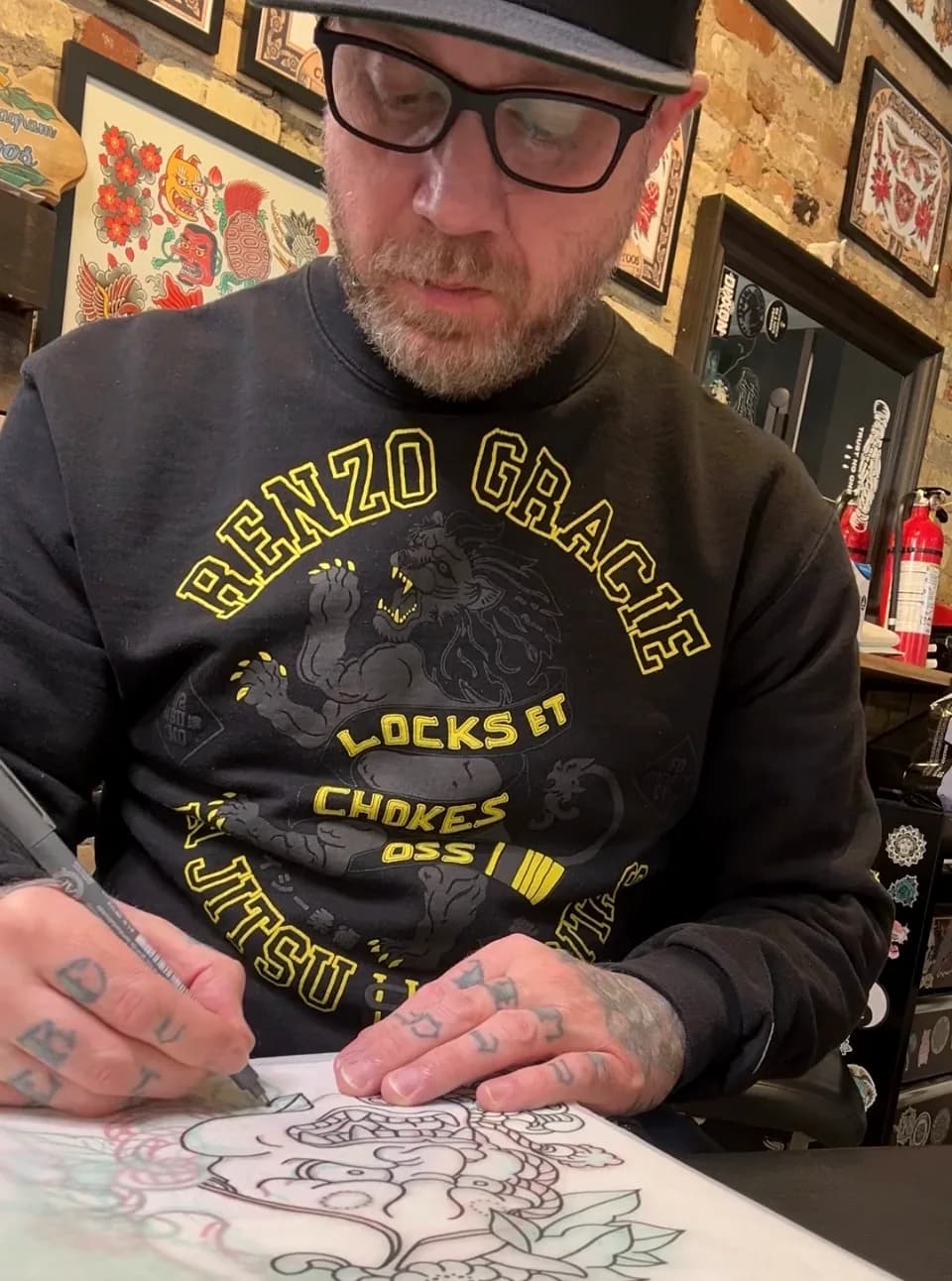
A tattoo is permanent. The design matters, the placement matters, but the person holding the machine matters most. After 25 years in this industry, I've seen incredible work and I've seen people walk in with tattoos they need covered up. The difference almost always comes down to choosing the right artist.
Here's how to make that choice with confidence.
Look at Their Portfolio — Really Look at It
Every tattoo artist has an Instagram or a website portfolio. But a lot of people scroll through quickly and think "that looks good" without knowing what they're actually evaluating. Here's what to pay attention to:
Consistency
One great tattoo in a feed of mediocre work means the artist got lucky once. Look for consistent quality across their whole portfolio. Are the lines clean on every piece? Is the shading smooth throughout? Are the compositions balanced? Consistency tells you what you'll actually get.
Healed Work
Fresh tattoos look good on almost everyone. The real test is how they look healed. If an artist posts healed photos alongside fresh ones, that's a great sign — it means they're confident in their work's longevity. If everything in their portfolio looks freshly done, glossy, and reddened, you're only seeing half the story.
Their Strengths
Every artist has styles they excel at. Some are incredible at Japanese work but their portraits are average. Some do photorealistic black and grey but their colour work is flat. There's no shame in specializing — in fact, it's a sign of honesty and self-awareness.
Find an artist whose best work matches the style you want. Don't ask a traditional specialist to do a photorealistic portrait, and don't ask a portrait artist to do a Japanese sleeve. You'll get the best result from someone who genuinely loves and practices the style you're after.
Check the Shop
A professional tattoo shop should feel clean the moment you walk in. Here's what to look for:
- Licensed and inspected. Legitimate shops display their health inspection certificates.
- Clean workstations. Surfaces should be clean, organized, and free of clutter. You should see evidence of proper sanitation practices.
- Single-use equipment. Needles, ink caps, gloves, and anything that contacts skin should be opened fresh in front of you from sealed packaging.
- Autoclave. Reusable equipment (grips, tubes if applicable) should be sterilized in an autoclave. Most modern shops use entirely disposable setups.
- Professional atmosphere. The shop should feel like a place where serious work happens. It doesn't have to be fancy, but it should feel organized and professional.
If a shop feels sketchy, trust your gut. Walk out. No tattoo is worth a health risk.
Talk to Them
A good artist will have a consultation process. Use it. This conversation tells you a lot:
Do they listen? When you describe what you want, do they actually hear you, or do they immediately push their own ideas? A good artist collaborates — they bring their expertise to your vision.
Do they give honest feedback? If you want a super detailed design crammed into a tiny space, a good artist will tell you it won't age well and suggest an alternative. An artist who just says "yeah, I can do that" to everything isn't looking out for your best interests.
Do they do custom work? An artist who creates original designs for every client is investing real time and skill into your piece. An artist who tattoos flash sheets and Pinterest screenshots is saving themselves effort at the expense of your uniqueness.
Are they professional about booking? Clear pricing, deposits to hold your spot, a defined process from consultation to session — these are signs of someone who takes their work and your time seriously.
Red Flags
Watch out for these:
- No portfolio or a very small one. If they can't show you a body of work, you're taking a gamble.
- Prices that seem too good to be true. Quality tattooing takes time, skill, and proper equipment — none of which are cheap. Bargain tattoos are rarely bargains.
- Copying other artists' work. If an artist shows no hesitation about directly copying someone else's custom design, that tells you something about their ethics and their ability.
- Pressure to commit immediately. A professional artist won't rush you into a decision. If someone's pushing you to book right now or get tattooed today, that's a sales tactic, not a sign of quality.
- Dismissing your questions. You're about to get something permanent on your body. Any question you have is valid, and a good artist will answer it patiently.
- No visible sanitation practices. If you don't see fresh needles, new gloves, and clean surfaces, leave.
Price and Value
Tattoo pricing varies, but there's a floor below which quality becomes unlikely. Professional artists in established shops typically charge by the hour, and the rate reflects their experience, overhead, and the quality of their materials.
My rate is $200 per hour with a $150 minimum and a $100 deposit to book. That rate accounts for 25 years of experience, custom design time, professional-grade equipment, and a clean, licensed studio environment.
The cheapest tattoo isn't the best deal. The best deal is a tattoo you're still proud of in 20 years.
Trust Your Gut
At the end of the day, you should feel comfortable with the person who's about to put permanent art on your body. If the work looks good, the shop is clean, the artist communicates well, and you feel confident in their abilities — you're in the right place.
Take your time. Do your research. And when you're ready, the right artist will make the whole experience something you remember fondly.
If you're looking for a tattoo artist in London, Ontario, I'd love to chat. Book a consultation or check out my portfolio.
Written by
Nate
25 years of tattoo experience at Village Tattoo Company, London, Ontario.
Book a Consultation