The koi fish is one of the most iconic subjects in Japanese tattooing. Rooted in centuries of Japanese folklore and art, the koi carries deep meaning — and almost every element of the design, from the direction the fish swims to its colour and the flowers surrounding it, tells a different story.
As a tattoo artist specializing in Japanese work for over 25 years, koi tattoos are one of my most requested subjects. Here's a breakdown of the symbolism so you can make informed choices about your own piece.
Upstream vs. Downstream — What Does It Mean?
This is one of the first questions I get asked. The direction your koi is swimming changes the entire meaning of the tattoo.
Swimming Upstream
A koi swimming upstream — fighting against the current — represents perseverance, determination, and the courage to overcome life's obstacles. This imagery comes from the ancient legend of koi fish swimming up the Yellow River and climbing the falls at Dragon Gate. The koi that made it to the top transformed into a dragon.
An upstream koi says you're still in the fight, pushing through adversity. It's a powerful choice for anyone who's been through hardship and wants their tattoo to reflect that resilience.
Swimming Downstream
A koi swimming downstream — going with the current — carries a different energy. It can represent having already overcome your struggles. You've conquered your challenge and you're at peace.
Some also interpret a downstream koi as not yet having the strength or courage to face obstacles. Context matters here, and I always talk through the intent with my clients before we start designing. Your personal meaning is what drives the design.
The Meaning of Koi Colours
Colour isn't just an aesthetic choice in Japanese tattooing. Each one carries its own symbolism.
Red or Orange is tied to love, passion, and intense energy. It's one of the most traditional and recognizable colour choices for koi.
Black represents overcoming adversity, particularly through great personal struggle. A black koi is often associated with the father figure in Japanese culture. In black and grey tattooing, this meaning carries through the tonal depth and contrast of the work.
Gold or Yellow symbolizes prosperity, wealth, and good fortune. Gold koi represent success and achievement — a popular choice for people marking a milestone or personal victory.
Blue is connected to masculinity, calm strength, and reproduction. Blue koi are often associated with the son in the family dynamic.
White represents career advancement and success in professional life. When combined with red — a combination known as Kohaku — it symbolizes love and relationships.
Pink or lighter red tones are often associated with the daughter, femininity, and grace.
Flowers That Complement Koi Tattoos
In Japanese tattooing, the flowers paired with a koi aren't random. They add another layer of meaning and tie the piece to a specific season, which is an important principle in traditional Japanese work.
Lotus
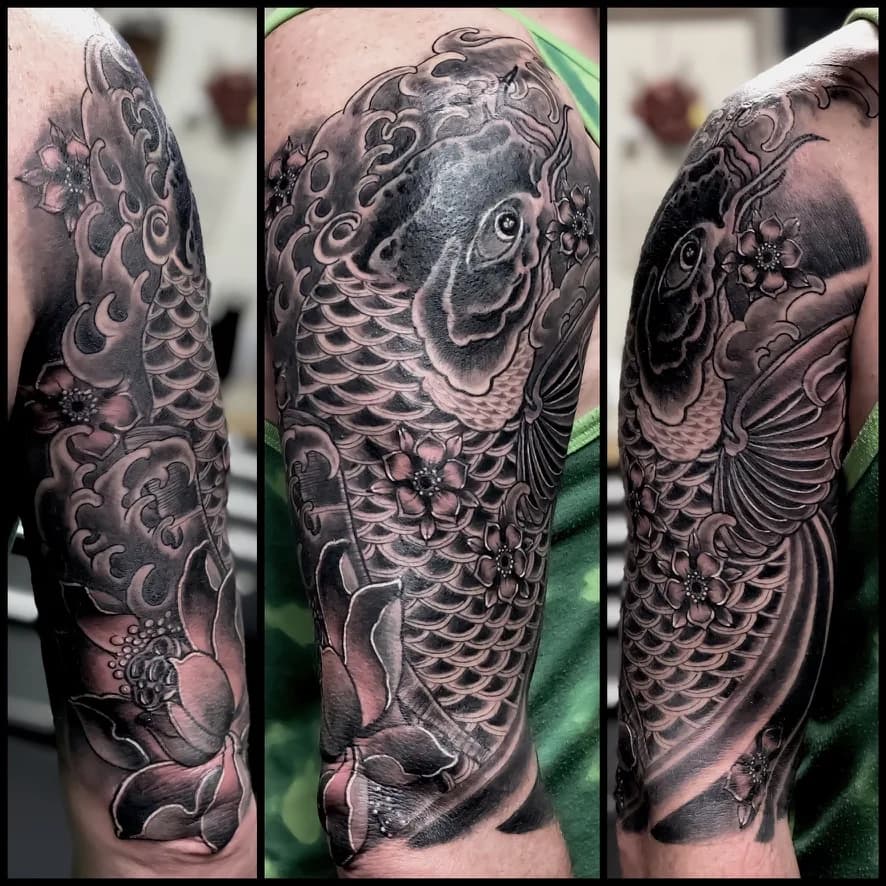
The lotus is the most classic pairing with koi. It grows from muddy water into something beautiful, mirroring the koi's own journey of transformation. Together, they represent perseverance through hardship leading to beauty and enlightenment. This is the combination in my own black and grey koi half sleeve piece — the lotus and koi together tell a complete story of struggle and growth.
Cherry Blossom (Sakura)
Cherry blossoms represent the fleeting nature of life and beauty in impermanence. Paired with a koi, they balance strength and determination with a reminder to appreciate the present moment. Sakura ties the piece to spring in the seasonal calendar of Japanese tattooing.
Chrysanthemum
The chrysanthemum is a symbol of longevity, perfection, and royalty in Japanese culture. It pairs well with koi to represent a long, determined life and is associated with autumn.
Peony (Botan)
Known as the "King of Flowers" in Japanese art, the peony represents wealth, honour, and good fortune. Combined with koi, it creates a bold, powerful composition. The peony is associated with late spring and early summer.
Maple Leaves (Momiji)
Maple leaves are tied to autumn and the passage of time. Paired with koi, they can represent graceful aging, embracing change, or reflecting on the journey you've been on.
Putting It All Together
Every element in a Japanese tattoo is intentional. When you're planning a koi piece, think about what story you want to tell — the direction, the colour, the surrounding elements all work together to create something personal and meaningful.
The half sleeve shown in this post is a great example: a black koi swimming upstream through churning water, paired with lotus flowers and cherry blossoms. The upstream direction speaks to perseverance, the black tones represent overcoming adversity, and the lotus reinforces that theme of beauty emerging from struggle.
If you're considering a Japanese koi tattoo, I'd love to talk through the symbolism and help design something that's truly yours. Every piece I do starts with a conversation about meaning — because the best tattoos aren't just well-executed, they carry a story that matters to you.
Written by
Nate
25 years of tattoo experience at Village Tattoo Company, London, Ontario.
Book a Consultation