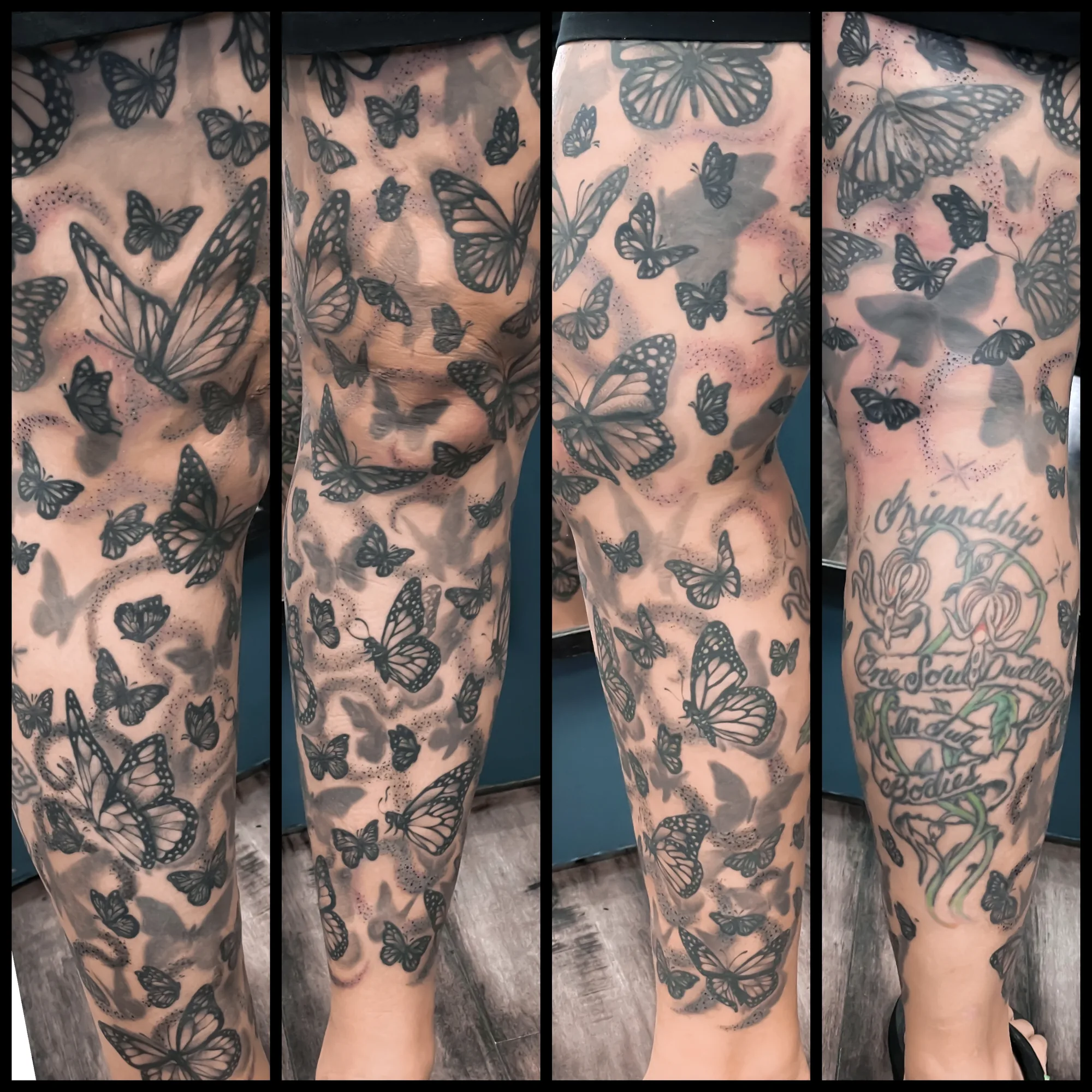
You just got a tattoo — now what? Proper aftercare is the difference between a tattoo that heals sharp and vibrant and one that loses detail or develops problems. After 25 years of tattooing, I've refined my aftercare process down to two proven methods.
Your tattoo is an open wound. How you treat it in the first two weeks determines how it looks for the rest of your life.
Method 1: Second Skin (Saniderm / Tegaderm)
Second skin is a medical-grade transparent adhesive film. It creates a sealed, breathable barrier over your fresh tattoo that lets it heal in its own natural fluids. This is my preferred method for most tattoos.
What to Expect Under the Film
Within the first few hours, you'll see fluid collecting under the second skin. This is completely normal — it's a mix of plasma, excess pigment, and blood. It can look dark, cloudy, or even a bit alarming. Don't panic. This is your body's natural healing response, and the film is designed for exactly this.
The Timeline
- I apply the second skin immediately after your session. This is a single application — you won't need to replace it yourself.
- Leave it on for 4–5 days. Don't peel it early. The film is doing its job, even if the fluid underneath looks messy.
- When it's time to remove it, peel it off slowly under warm running water. Pull it back over itself (like removing a sticker), don't yank it straight up.
- Wash gently with lukewarm water and a mild, fragrance-free soap. Pat dry with a clean paper towel — never a cloth towel.
If the second skin starts to lift or peel at the edges on its own before the 4–5 days are up, go ahead and remove it and switch to the traditional aftercare method below.
After Removal
Once the second skin comes off, your tattoo should look well on its way to healed. Keep it moisturized with a thin layer of unscented lotion (Lubriderm, Aveeno, or similar) for the next week or so. Don't over-moisturize — a little goes a long way.
Second Skin Do's and Don'ts
- Do leave it on for the full recommended time
- Do remove it if you see signs of infection (spreading redness, warmth, pus)
- Do contact me if anything looks or feels off
- Don't try to apply a second piece of second skin yourself — if the first one comes off early, switch to the traditional method below
- Don't work out heavily with it on — sweat can loosen the adhesive
- Don't submerge it in water (no baths, pools, hot tubs)
Method 2: Traditional Bandage
Some clients prefer the traditional route, and certain tattoo placements don't work well with second skin (areas with a lot of movement, body hair, or creasing). This method has been used for decades and works great when followed properly.
The First Night
I'll wrap your tattoo with a bandage after your session. Leave the bandage on overnight. This protects the fresh tattoo while you sleep — your sheets stay clean and the tattoo stays covered during those first critical hours. Remove the bandage the next morning.
Washing Routine
- Remove the bandage in the morning
- Wash with lukewarm water and a mild, fragrance-free soap (Dove Sensitive, Dr. Bronner's Baby, or similar)
- Use your clean hands only — no washcloths, sponges, or loofahs
- Pat dry with a clean paper towel
- Let it air dry for 10–15 minutes before applying anything
Days 1–3: Wash and Dry
Wash your tattoo 2–3 times a day using the method above. Don't apply any lotion or ointment yet. Let your body start the healing process naturally. Your tattoo will feel tight, and that's normal.
Days 4–14: Moisturize
Starting around day 4, begin applying a thin layer of unscented lotion after each wash. The key word is thin — you want a light, almost invisible layer. Your tattoo needs to breathe.
You'll start to see peeling and flaking around this time. This is completely normal. Do not pick, scratch, or peel the flaking skin. Let it fall off naturally. Picking can pull pigment out and leave gaps in your tattoo.
Traditional Method Do's and Don'ts
- Do wash with clean hands 2–3 times daily
- Do keep it out of direct sunlight
- Do wear loose, breathable clothing over the area
- Don't re-bandage it after the initial overnight wrap
- Don't use Vaseline, Polysporin, or petroleum-based products
- Don't scratch or pick at peeling skin
- Don't soak it (no baths, pools, lakes, hot tubs for at least 2 weeks)
General Aftercare — Both Methods
No matter which method you're using, these rules apply across the board.
Avoid for at Least 2 Weeks
- Swimming, hot tubs, saunas, and baths (showers are fine)
- Direct sunlight and tanning beds
- Heavy gym sessions that cause friction or excessive sweating on the tattooed area
- Tight clothing that rubs the tattoo
- Letting pets sleep on or lick the area
Long-Term Care
Once your tattoo is fully healed (usually 2–4 weeks), the single best thing you can do is wear sunscreen. UV exposure is the number one enemy of tattoo longevity. A good SPF 50 on your tattoo whenever you're in the sun will keep it looking sharp for years.
When to Contact Me — or Your Doctor
Reach out to me if you notice any of these:
- Increasing redness that spreads beyond the tattoo
- Unusual swelling that doesn't decrease after a few days
- Warm skin with green or yellow discharge
- A fever that starts after getting tattooed
I'm happy to take a look and give you my honest assessment. If I see anything that concerns me, I'll tell you to see your doctor. If you notice any signs of infection within 24 hours of your session — or at any point during healing — contact your family doctor or visit a walk-in clinic. This is rare, but your health always comes first, and a medical professional can prescribe treatment if needed.
Don't wait and hope it gets better on its own. Early treatment makes a big difference.
Questions?
Every person heals a bit differently. If you're unsure about anything during your healing process, there are a few ways to reach me:
- Instagram: Send me a photo on @nate_tattoos
- Phone: Call the studio at 519-870-8878
- Email: info@natetattoos.com
I'd rather you ask than guess.
Written by
Nate
25 years of tattoo experience at Village Tattoo Company, London, Ontario.
Book a Consultation