Japanese Tattooing
Japanese Tattoos in
London, Ontario
Dragons, koi, hannya, foo dogs. Sleeves and back pieces planned as one composition, and standalone pieces that stand on their own. Drawn from scratch at Village Tattoo Company on Dundas Street.
How the work is built
Composition comes first
Japanese tattooing is a compositional tradition before it is a list of subjects. Where the main subject sits, which direction the background moves, where the piece stops and how that edge gets finished — those decisions get made against the shape of your arm or your back, not against a flat drawing on paper.
That is why the conversation usually starts wider than the subject you walked in with. A dragon is a dragon on a page. On a body it has to turn a shoulder, clear an elbow, and still read as one thing when you're standing across the room from it.
It also means the planning happens before the needle does. Sizing, placement, and how the piece might grow are settled early, because those are the decisions that are expensive to undo once there is ink in the skin.
Japanese Work
Recent Japanese pieces
Twelve of the 37 Japanese pieces in the portfolio — colour and black and grey, sleeves, leg and back work, and smaller standalone pieces.
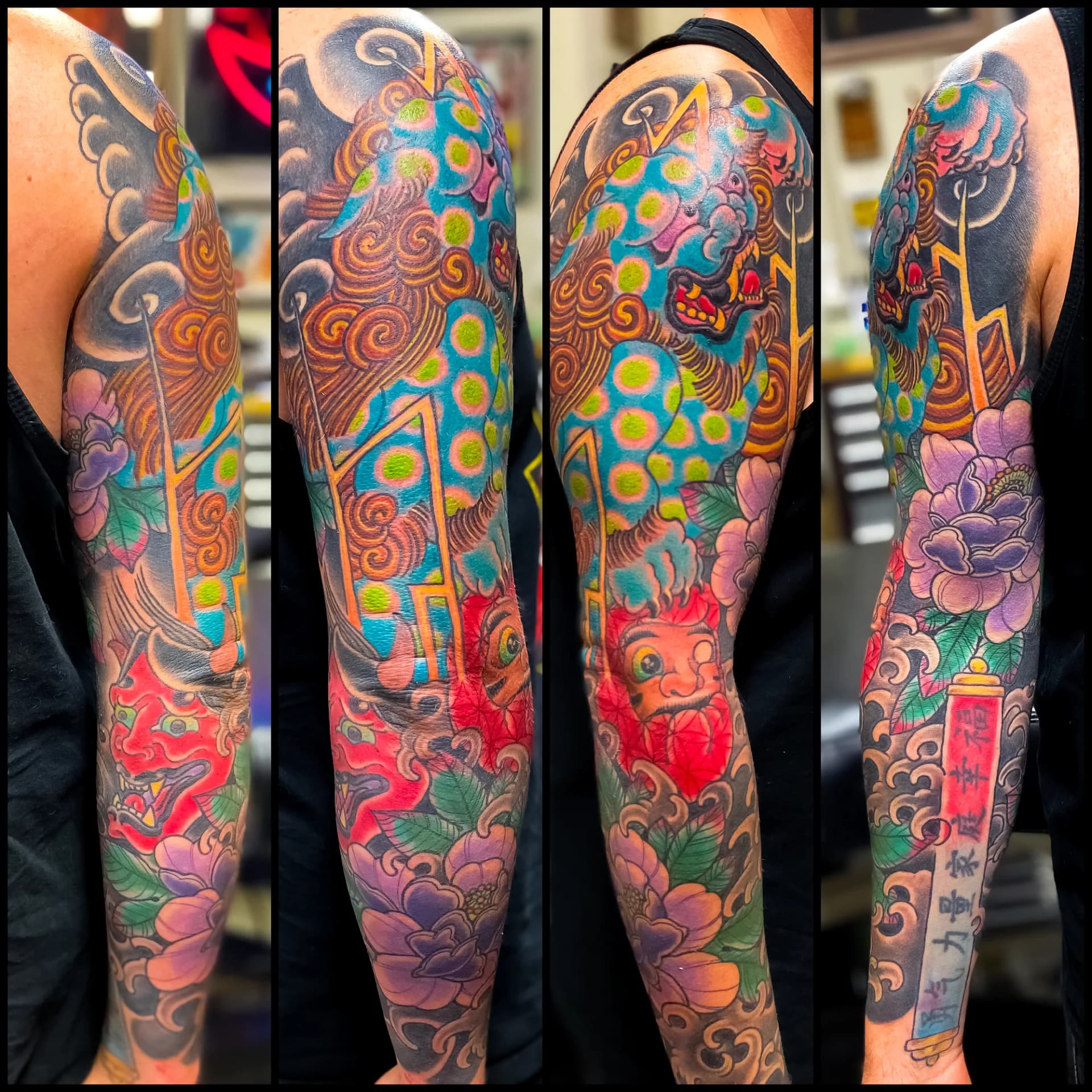
Foo Dog Japanese Colour Sleeve
Full arm sleeve · Full sleeve
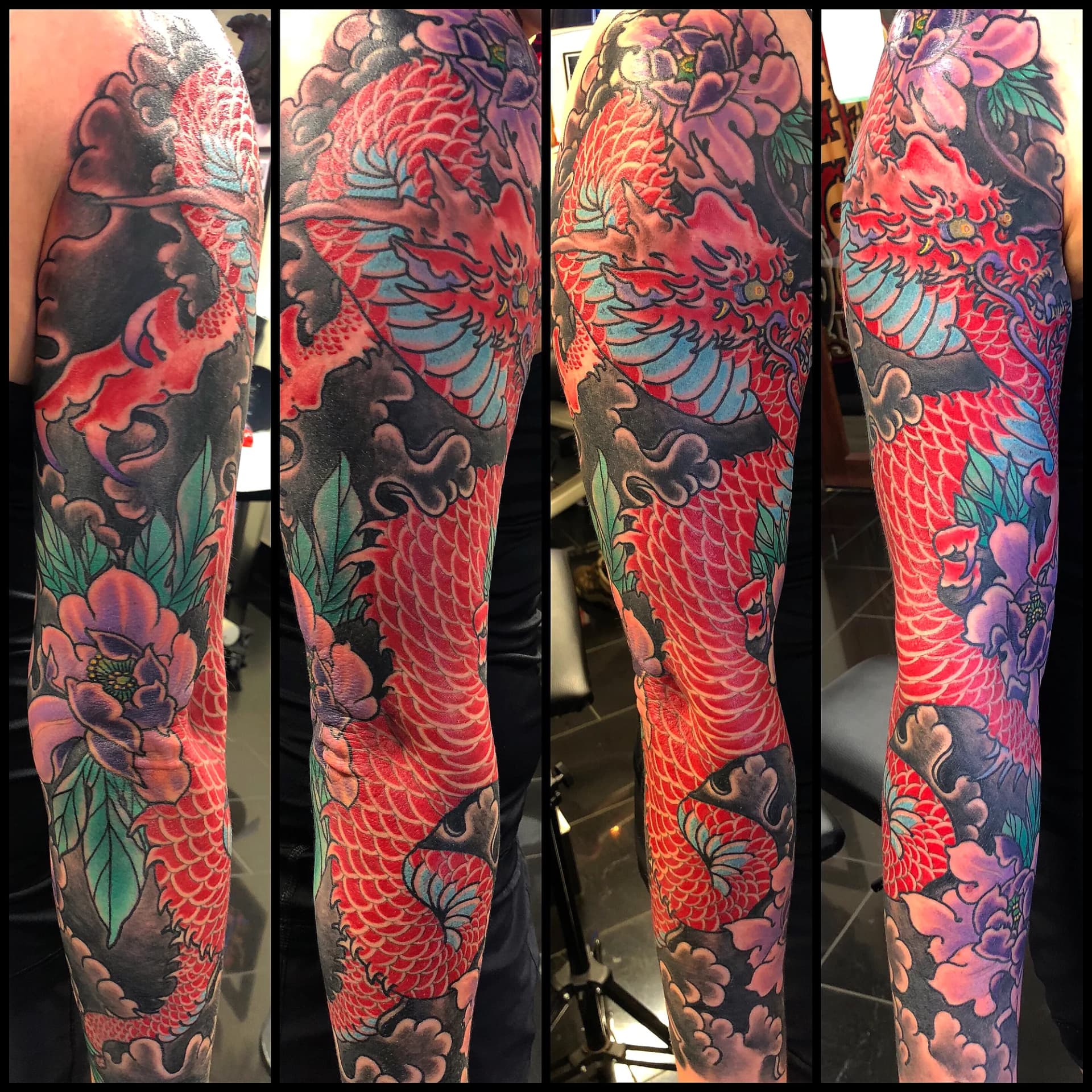
Red Dragon Colour Sleeve
Full arm sleeve · Full sleeve
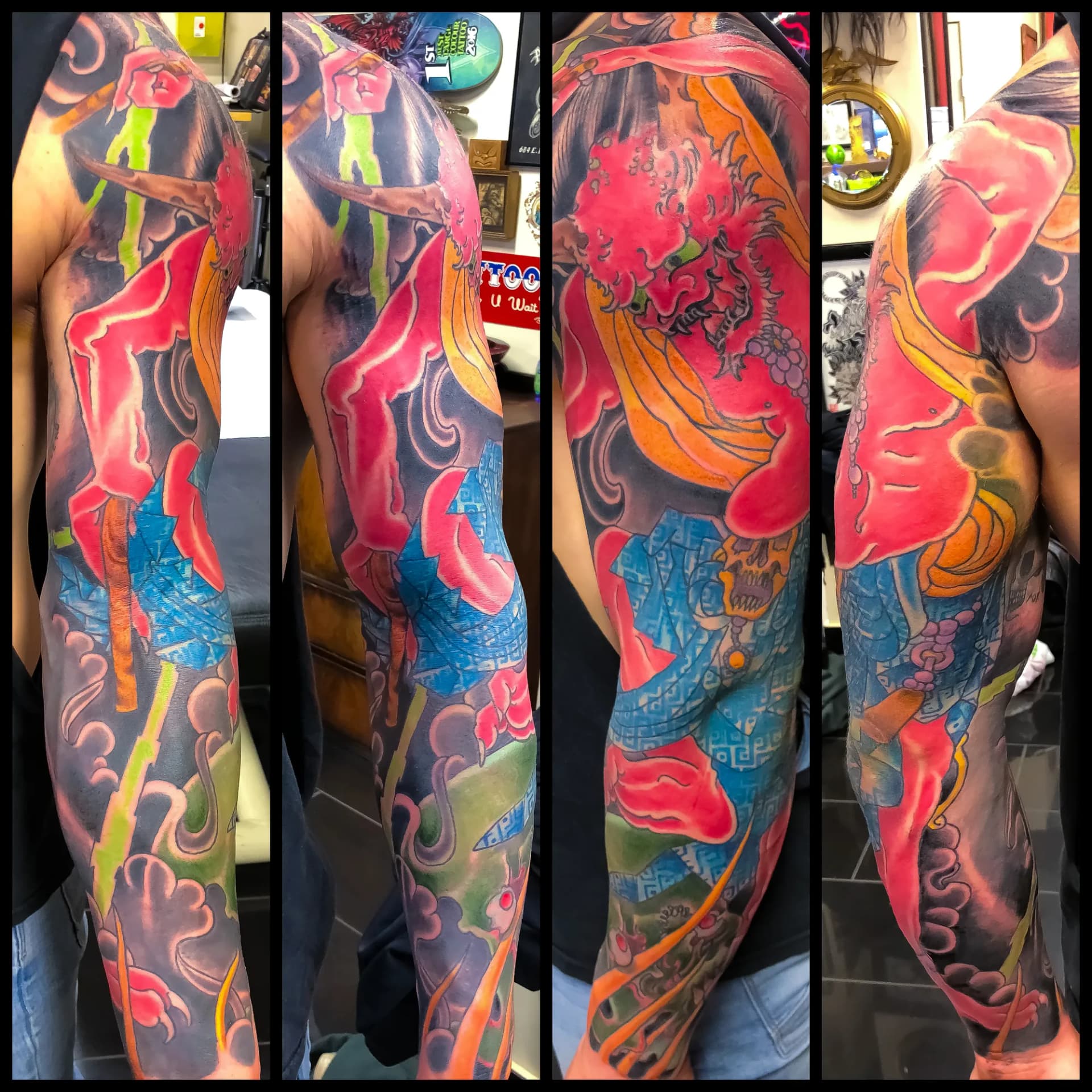
Raijin Thunder God Japanese Leg Sleeve
Full leg sleeve · Full sleeve
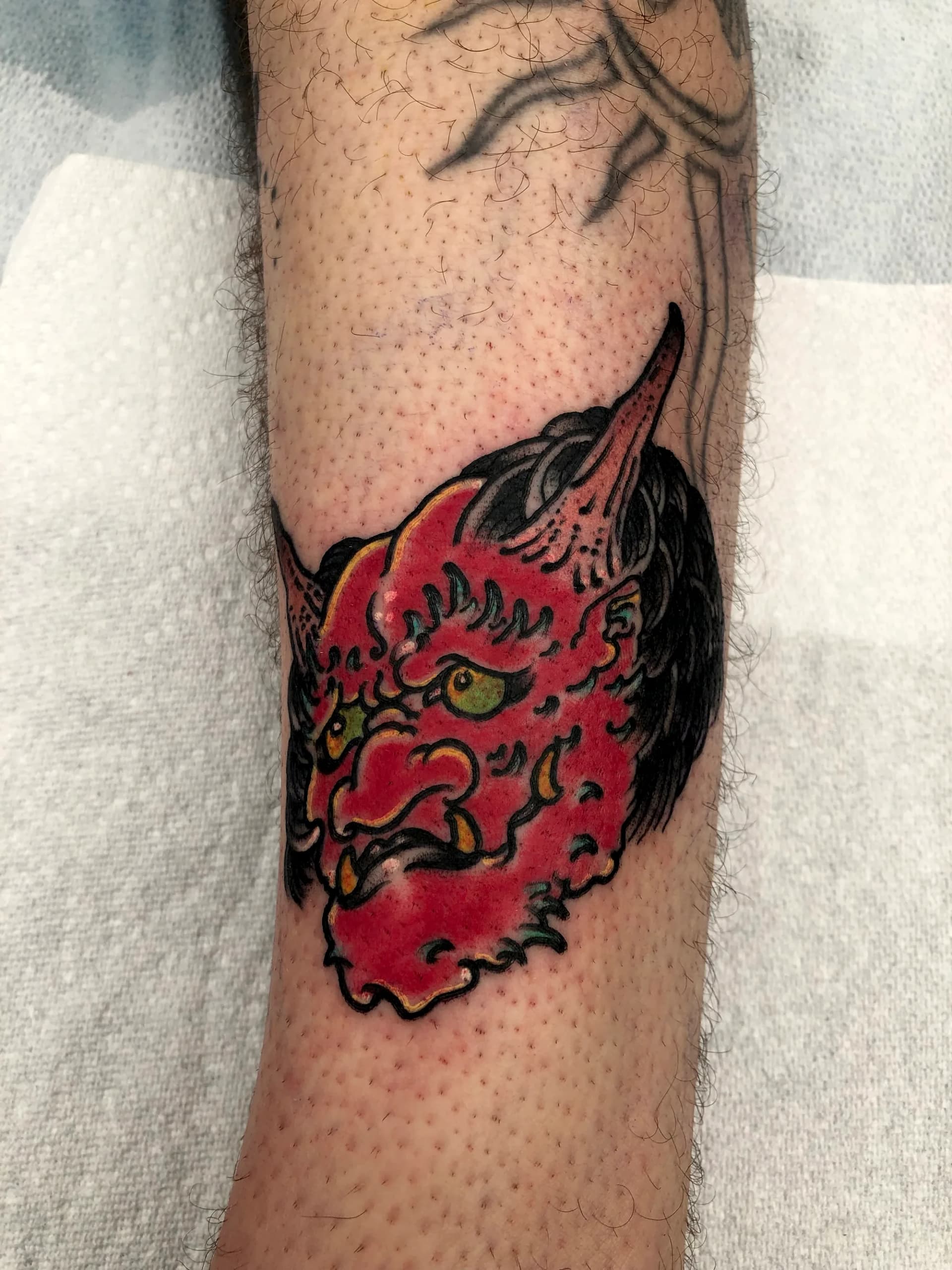
Oni Demon Colour Sleeve
Full arm sleeve · Full sleeve
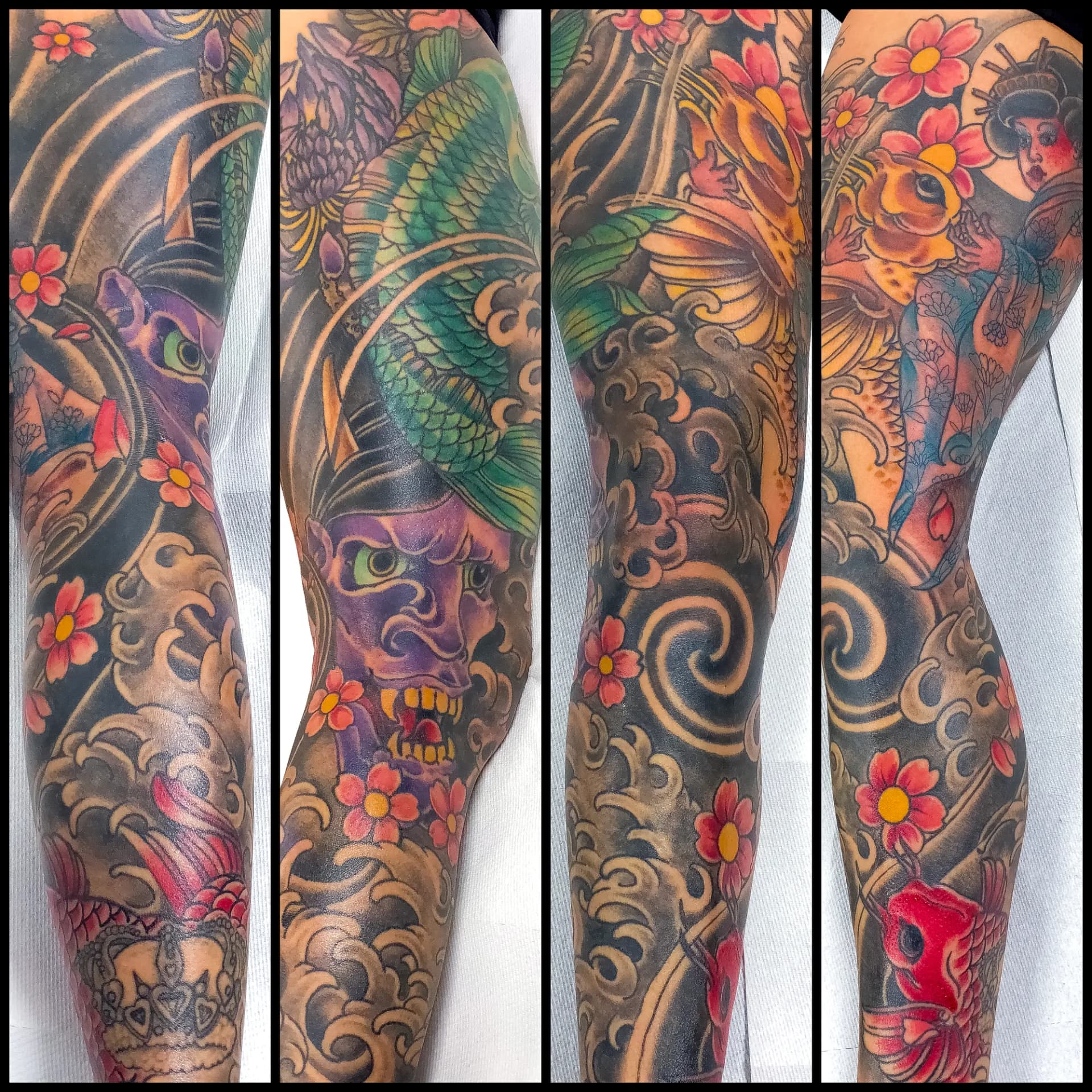
Koi Fish Colour Leg Sleeve
Full leg sleeve · Full sleeve
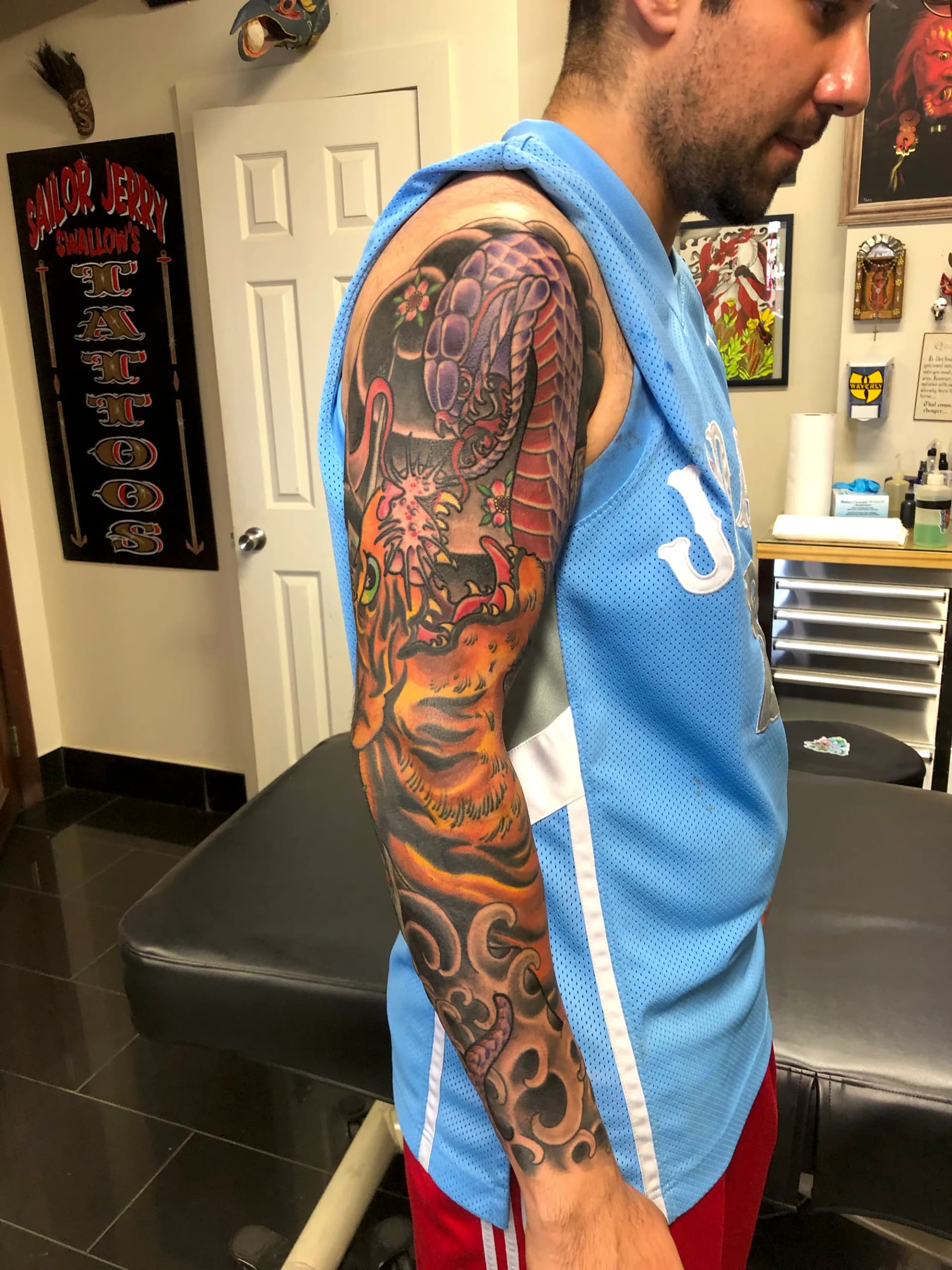
Tiger Japanese Colour Half Sleeve
Half sleeve · Half sleeve
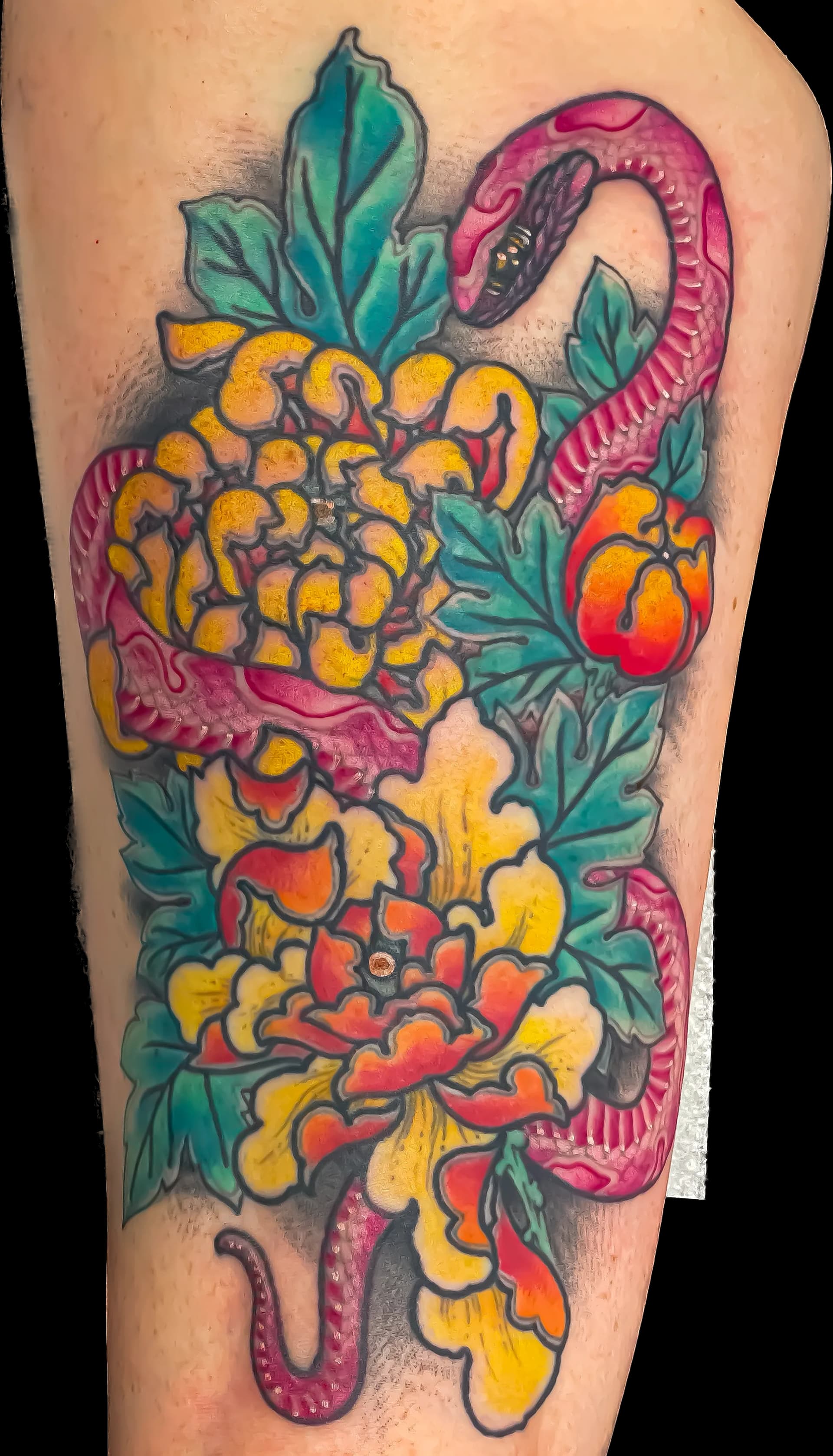
Snake & Peony Japanese Forearm
Forearm · Medium piece
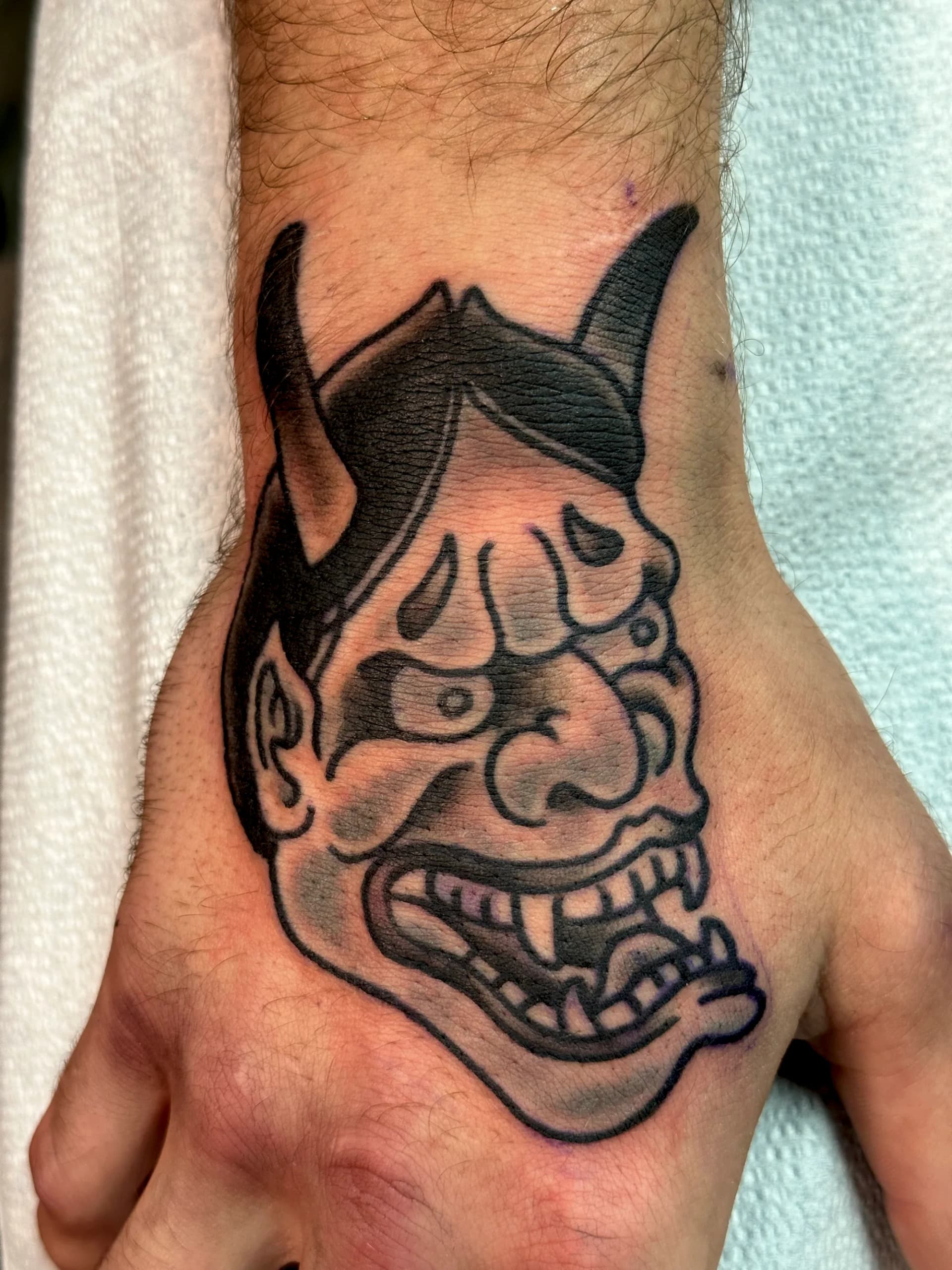
Hannya Mask Japanese Colour
Hand · Small piece
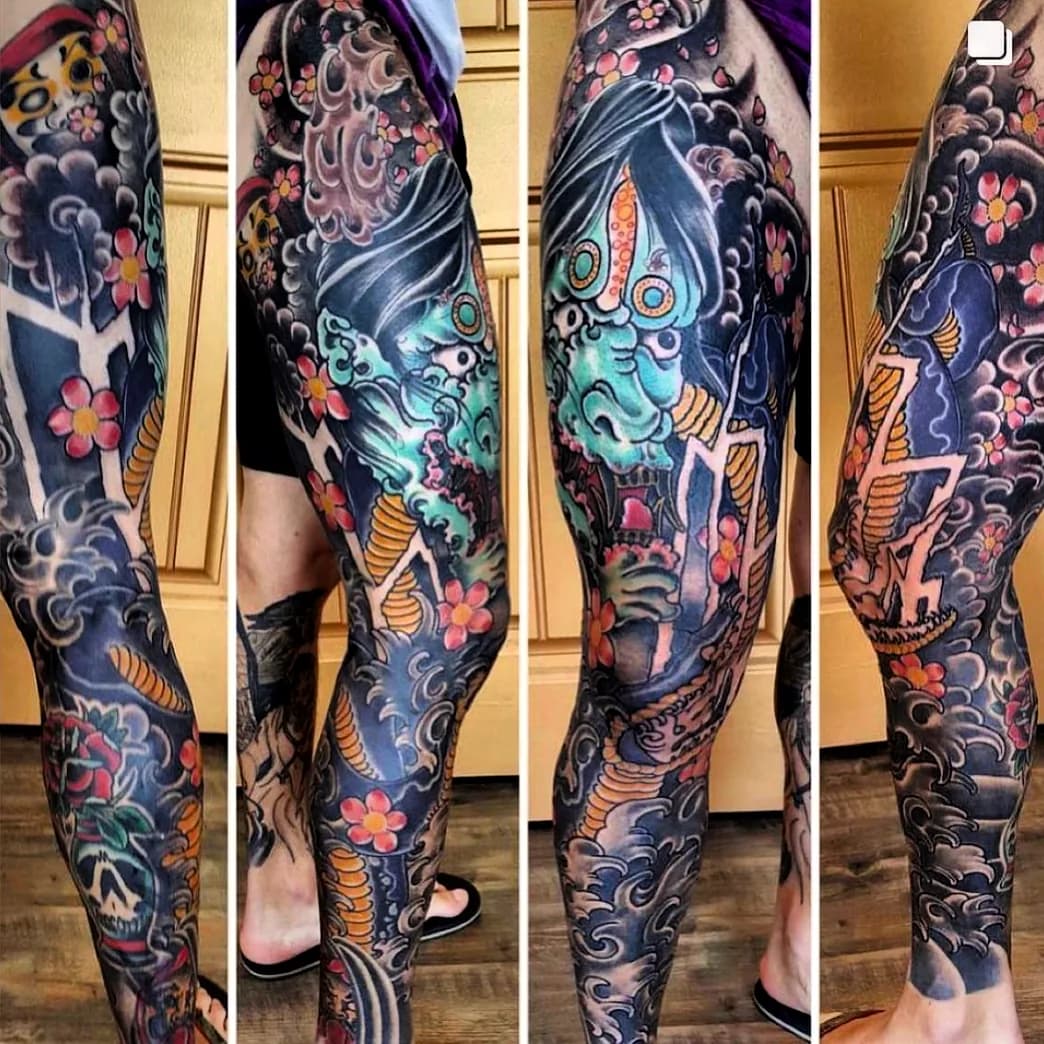
Hannya Lightning Japanese Leg Sleeve
Full leg sleeve · Full sleeve
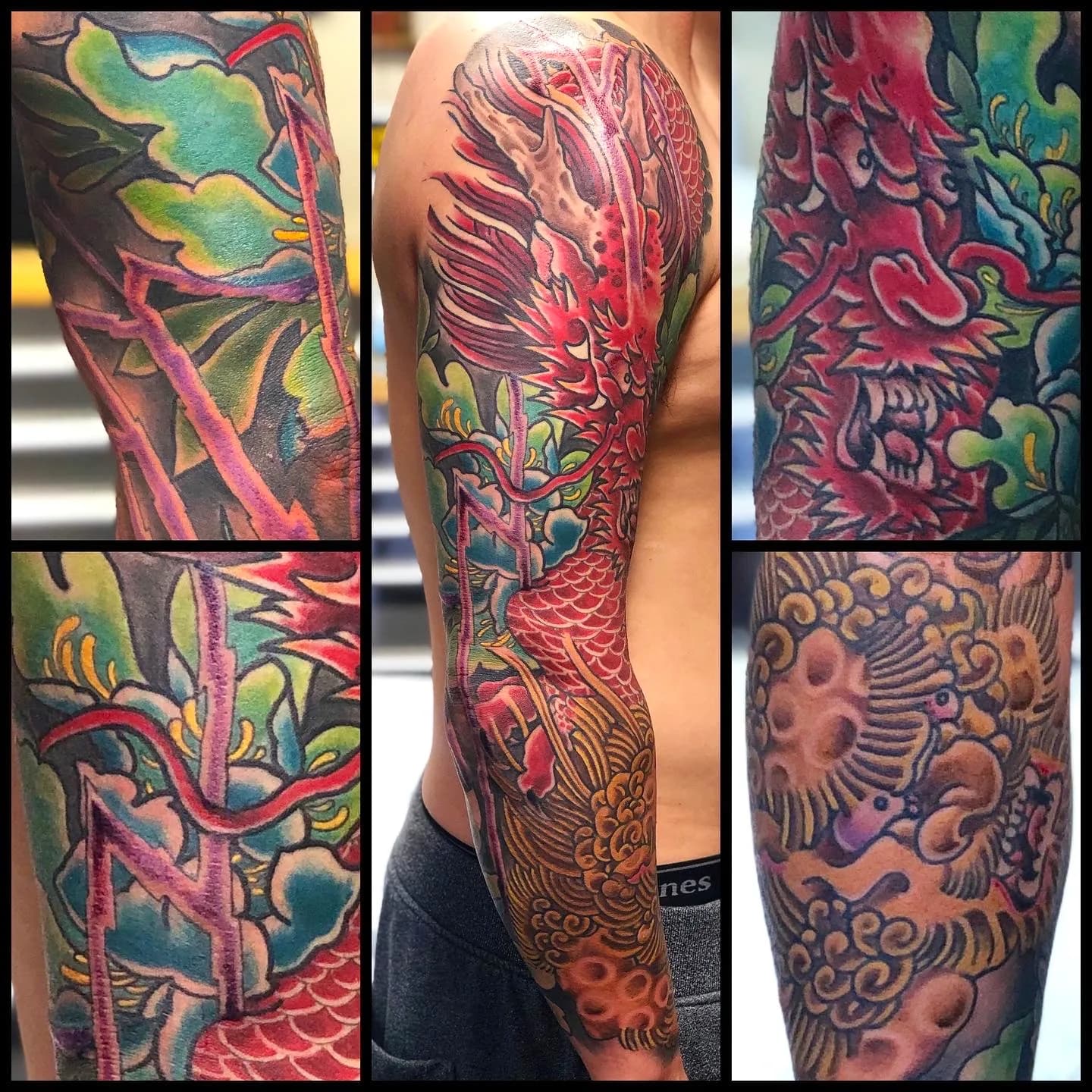
Dragon & Foo Dog Colour Sleeve
Full arm sleeve · Full sleeve
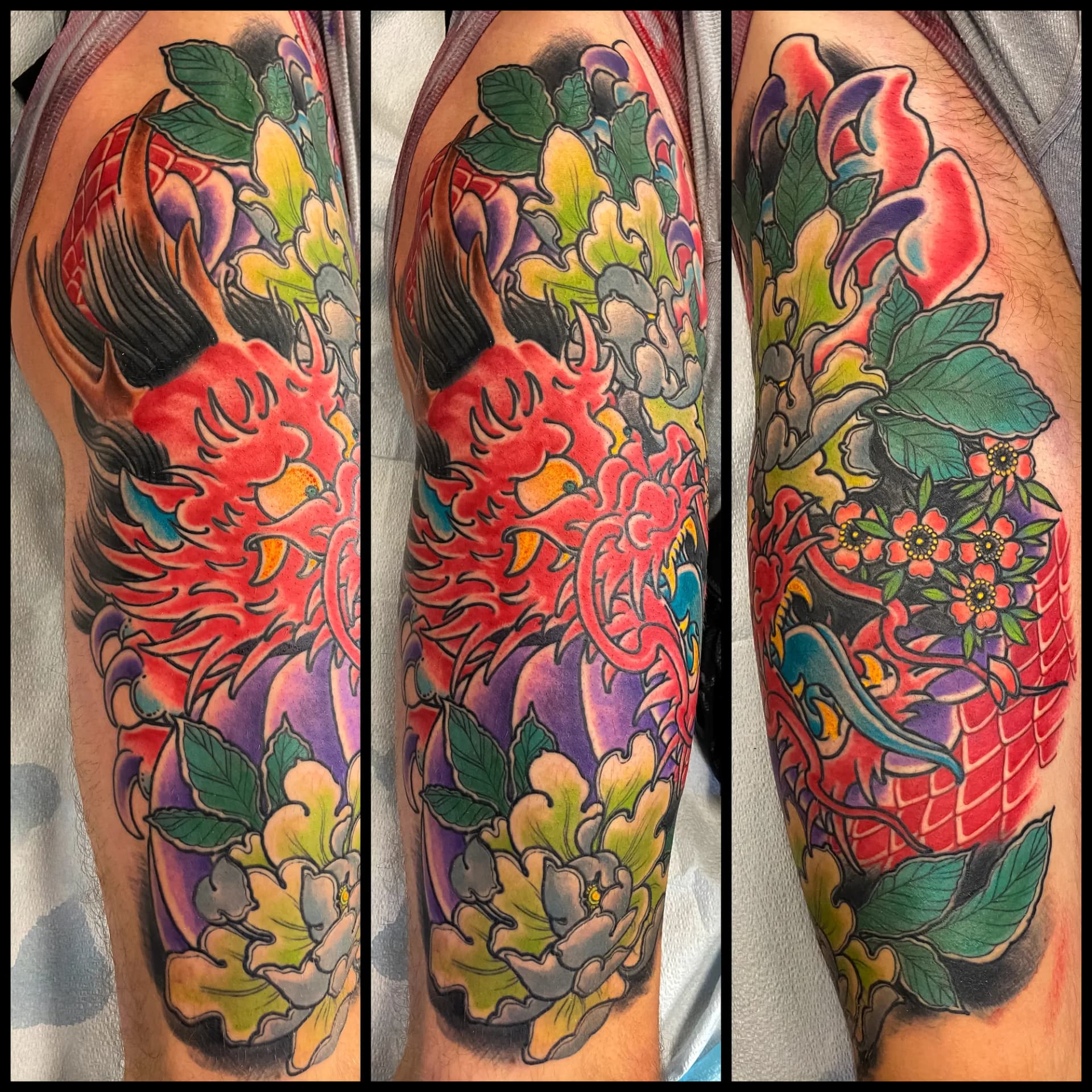
Green Dragon & Peonies Colour Sleeve
Full arm sleeve · Full sleeve
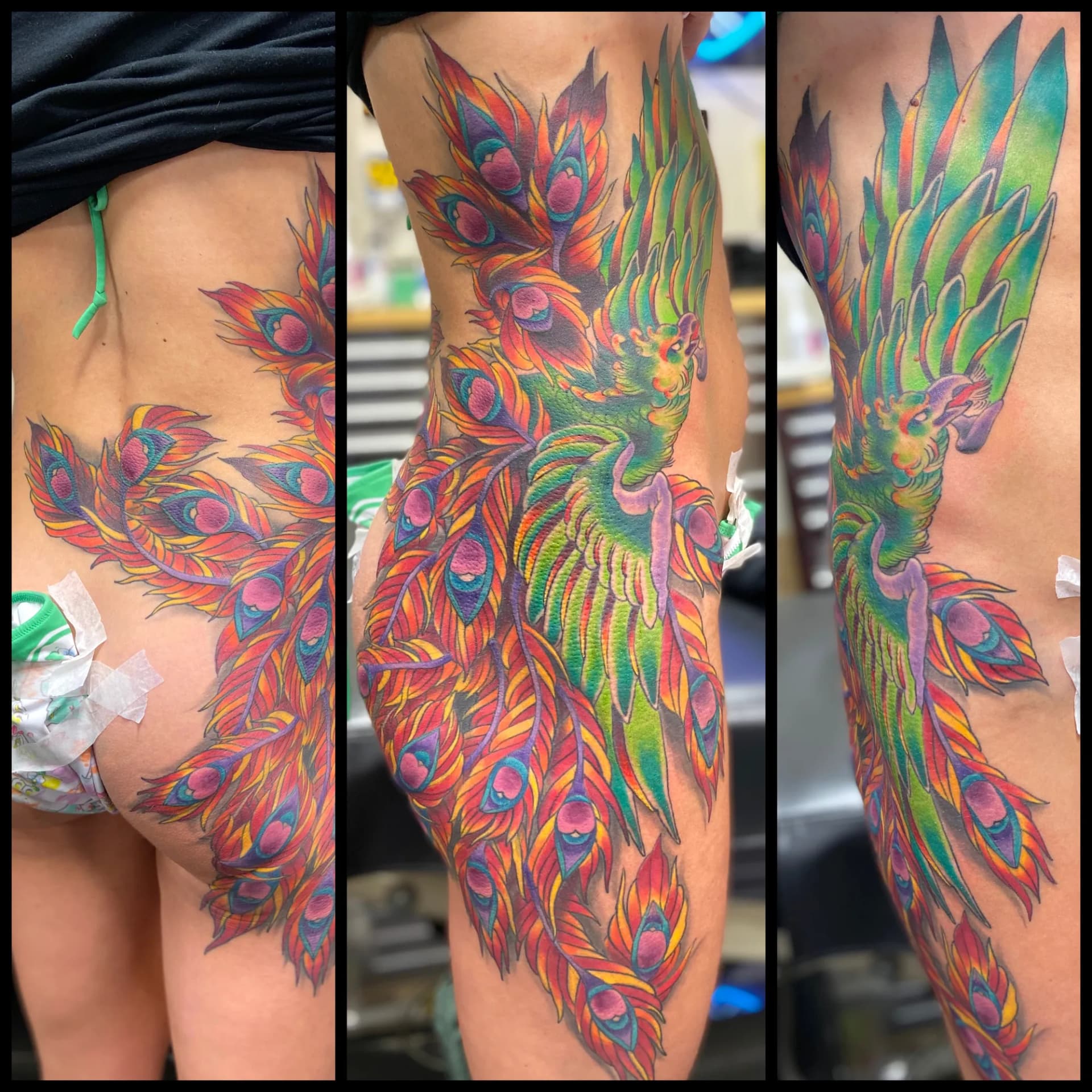
Phoenix Colour Full Side Piece
Full side (ribs to leg) · Large piece
Scale and sessions
What a large piece actually takes
Large-scale work — a full sleeve or a back piece — usually runs five to ten sessions, most of them three to five hours. A half sleeve is roughly half that. Sessions are spaced out for healing, so a sleeve is a commitment measured in months rather than weeks.
Large-scale work is charged at $200 an hour. Smaller standalone pieces get quoted before the design starts, in the same range as traditional flash: roughly $150 for something small, $250 mid-size, $350 for larger.
“It's really hard to price a tattoo that isn't drawn or sized yet — that changes the price dramatically.”
Which is why the quote comes after the design conversation rather than before it. For large-scale work a consultation gets started first, and that usually means a tracing of the area or a photo so the piece can be sized properly. More on how the process runs.
A friend once told me: stop chasing a style. You will never have somebody else's style. What makes your art your style are the “mistakes” you make in your artwork — and that's what makes it yours.
Scope
What I don't take on
Portraits and photorealism aren't work I take, and neither is anything that won't tattoo well or age well over time. That applies to Japanese work the same as everything else — if a design isn't going to hold its read, it isn't worth putting in skin.
Everything here is drawn rather than traced. Bring references for direction — the subject, the mood, whatever is pulling you toward it — and the drawing comes from there.
Questions
Japanese tattooing, answered
Does a Japanese sleeve have to be one connected piece?
Not at all. A lot of my Japanese work is standalone and stands on its own — in those cases there's usually no background at all. But if there's any chance it grows later into a sleeve, leg, back, chest or torso piece, I'll ask up front. If we do add background, I want it built so we can keep expanding on it into a full piece rather than boxing you in.
Can you work around tattoos I already have?
Sometimes we can, sometimes we can't — it's that simple. That gets figured out at the consultation.
How many sessions does a full sleeve take?
Large-scale work — full sleeve, back piece — usually runs five to ten sessions, most of them three to five hours. A half sleeve is roughly half that. Sessions get spaced out for healing, so a sleeve is a commitment measured in months, not weeks.
What does it cost?
$200 an hour for large-scale work. Small traditional flash gets quoted before the design starts — roughly $150 for something small, $250 mid-size, $350 for larger. It's really hard to price a tattoo that isn't drawn or sized yet — that changes the price dramatically. Which is why quotes come after the design conversation, not before it.
Do I need a consultation first?
Not always. If I need one, I'll say so. For large-scale work I'll generally get a consultation started — for those I need a tracing of the area or a photo so I can size it out right.
Do you copy designs from reference images?
No. I don't copy-paste or trace. I draw the artwork the way my brain and my eyes see it. Bring references for direction — subject, mood, what's pulling you — and the drawing comes from there.
Is there symbolism I should know about before choosing a subject?
There is, and it's worth knowing. I love the art, the history, the culture, and I approach it with respect — I draw the imagery from that standpoint. Part of the consultation is making sure the subject you're drawn to actually means what you think it means.
Booking
Where to find me
I tattoo out of Village Tattoo Company at 898 Dundas St., London, Ontario N5W 3A1, Thursday through Saturday, 11:00 AM to 5:00 PM. Booking is by appointment, and walk-ins are welcome when time permits.
To start a Japanese piece, call (519) 870-8878 or send the details through the contact form.
Start the drawing
Bring me a subject.I'll draw it from scratch.
Tell me what you're thinking — subject, placement, and roughly how big. For large-scale work, a photo or tracing of the area gets the sizing conversation started.