American Traditional
Traditional Tattoos in London, Ontario
Bold linework, solid colour, and subjects that have earned their place. Flash off the wall or drawn for you, at Village Tattoo Company on Dundas Street.
The point of it
Built to still read in twenty years
A tattoo that photographs well the week it heals and a tattoo that still reads two decades later are not always the same tattoo. Traditional tattooing was built around the second one.
Heavy outlines, solid fills and a deliberately narrow palette aren't stylistic quirks. They're the structure of the design — what carries the read from across a room, and what I build around first.
That standard is also the reason some work gets turned down. Anything that won't tattoo well or age well over time isn't worth putting in skin, and that rule is inherited directly from traditional tattooing rather than applied on top of it.
Two ways in
Flash, or drawn for you
Both are on the table. Neither is the lesser option — they just suit different people and different days.
Flash
Designs already drawn and ready to go. For smaller pieces it's the shortest route from walking in to being tattooed, and picking off the wall is a perfectly legitimate way to get a good tattoo.
Custom
Traditional work drawn for you specifically. Bring references for direction — the subject, the feel, what pulled you to it — but the drawing itself is mine. No copy-paste, no tracing.
Traditional Work
Traditional pieces from the portfolio
Fifteen of the 44 traditional pieces in the portfolio — colour and blackwork, flash-style classics and custom drawings, from hand and neck work up to full sleeves.
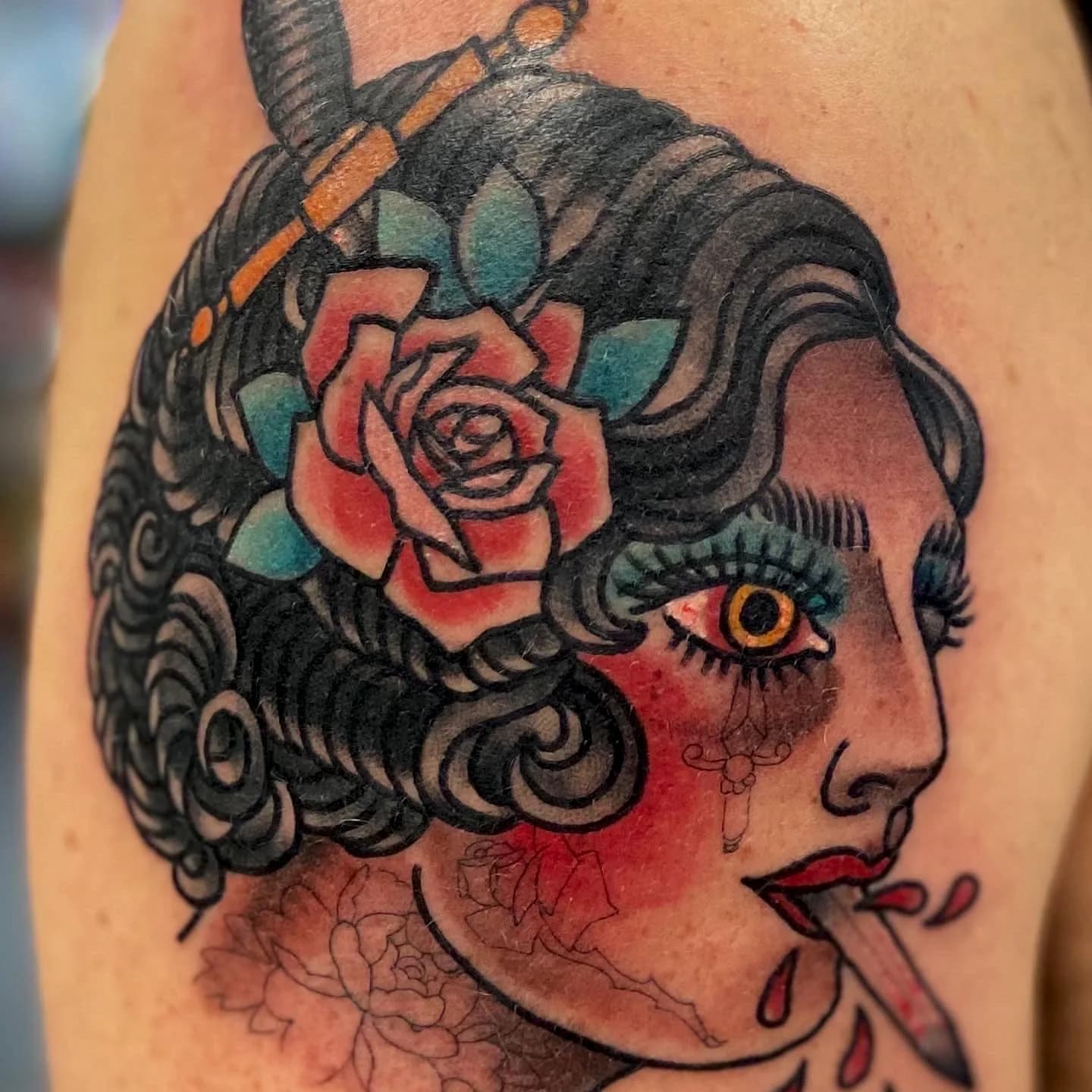
Lady Head, Dagger & Rose Traditional Forearm
Forearm · Medium piece
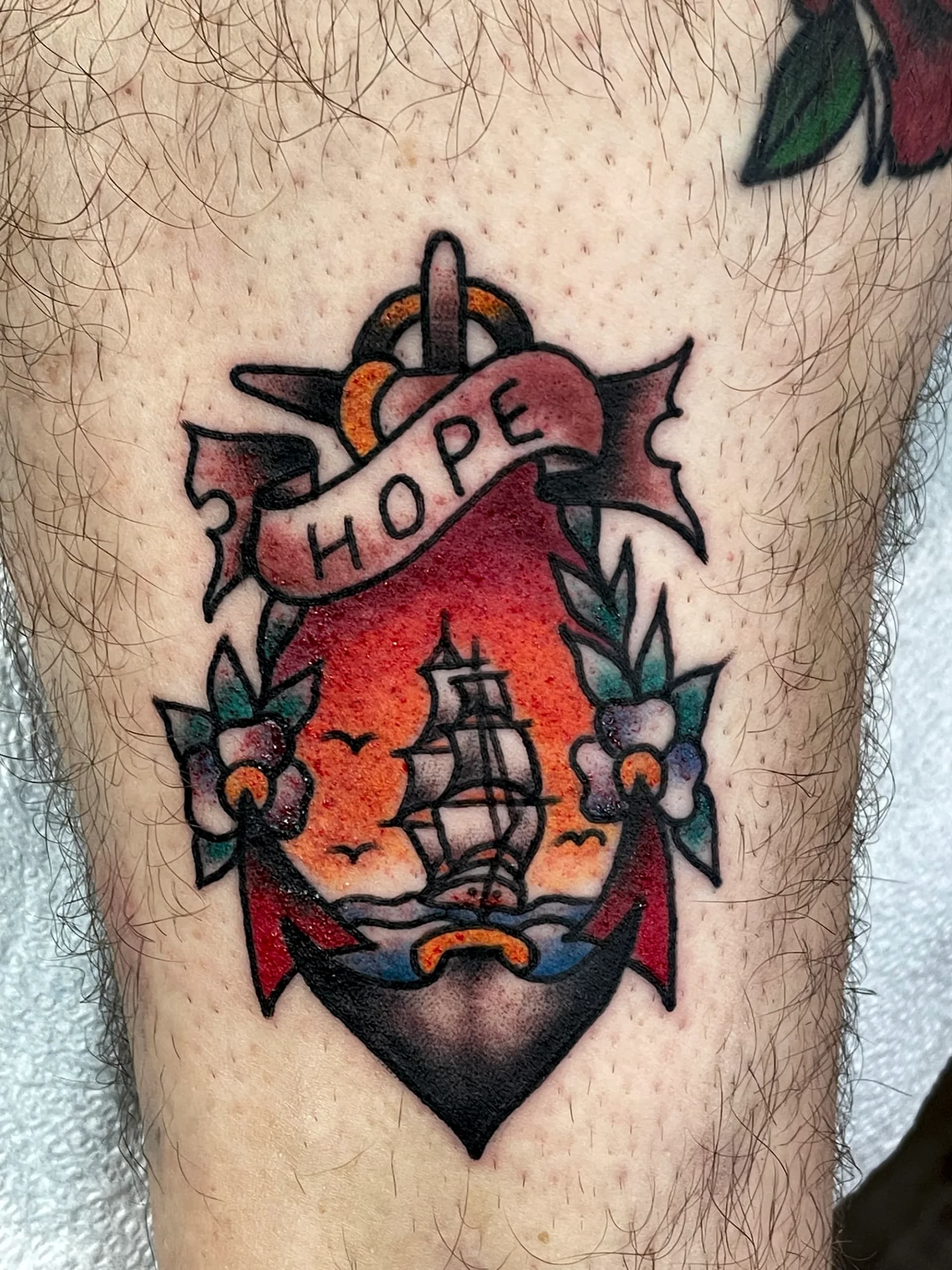
Ship Traditional Ribs
Ribs · Large piece
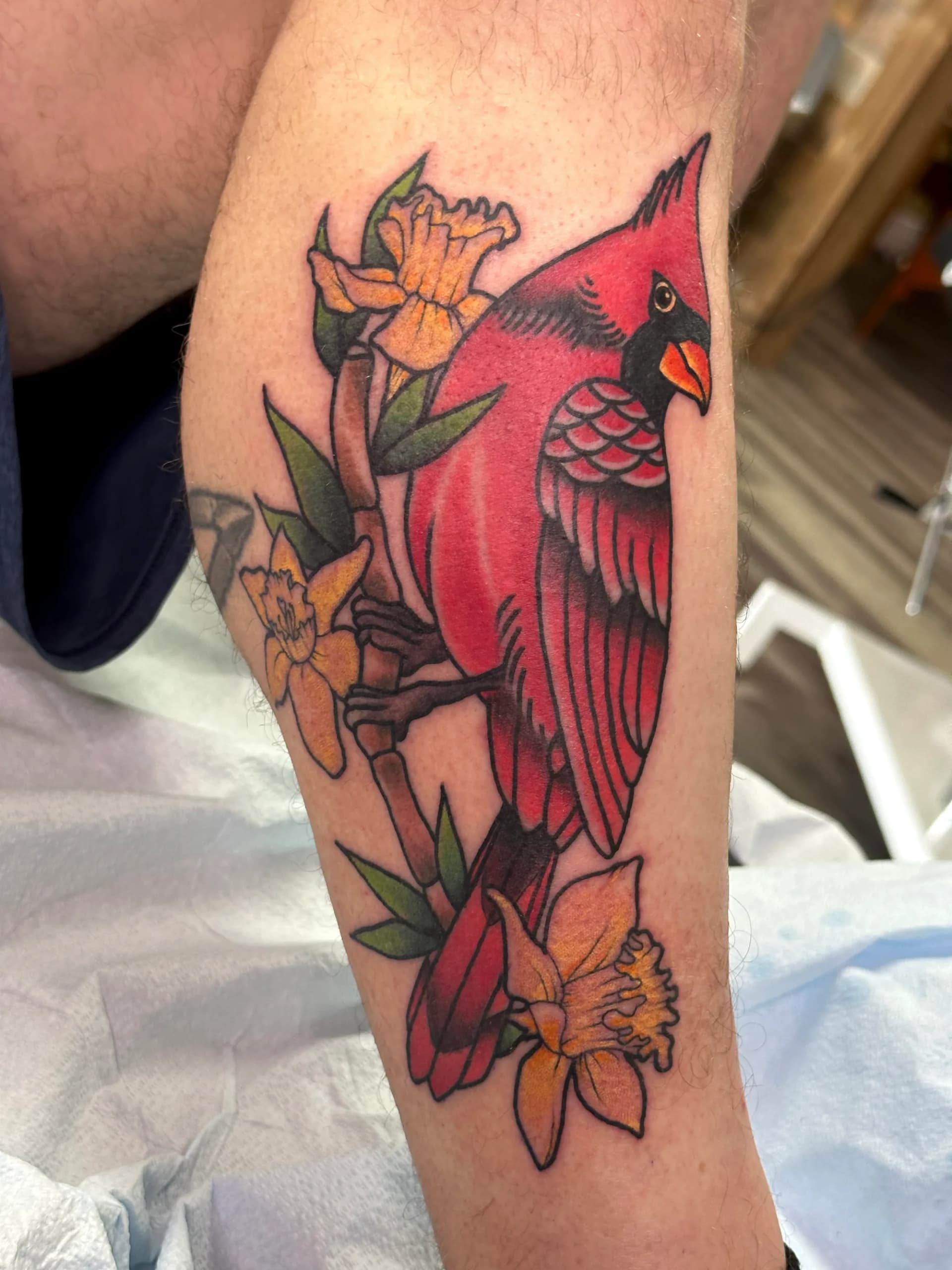
Cardinal & Roses Traditional Shoulder
Shoulder · Medium piece
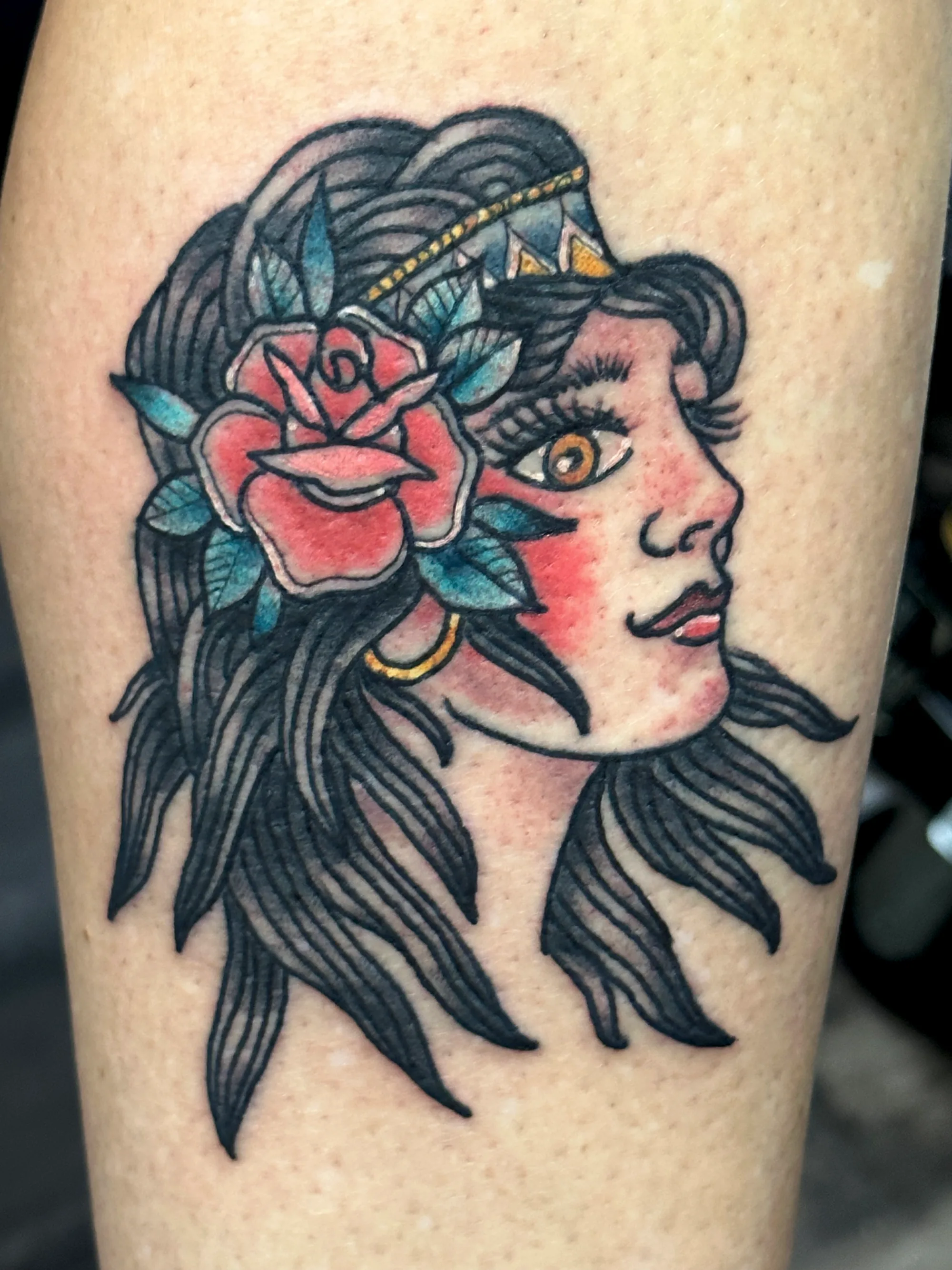
Lady Head Traditional Upper Arm
Upper arm · Medium piece
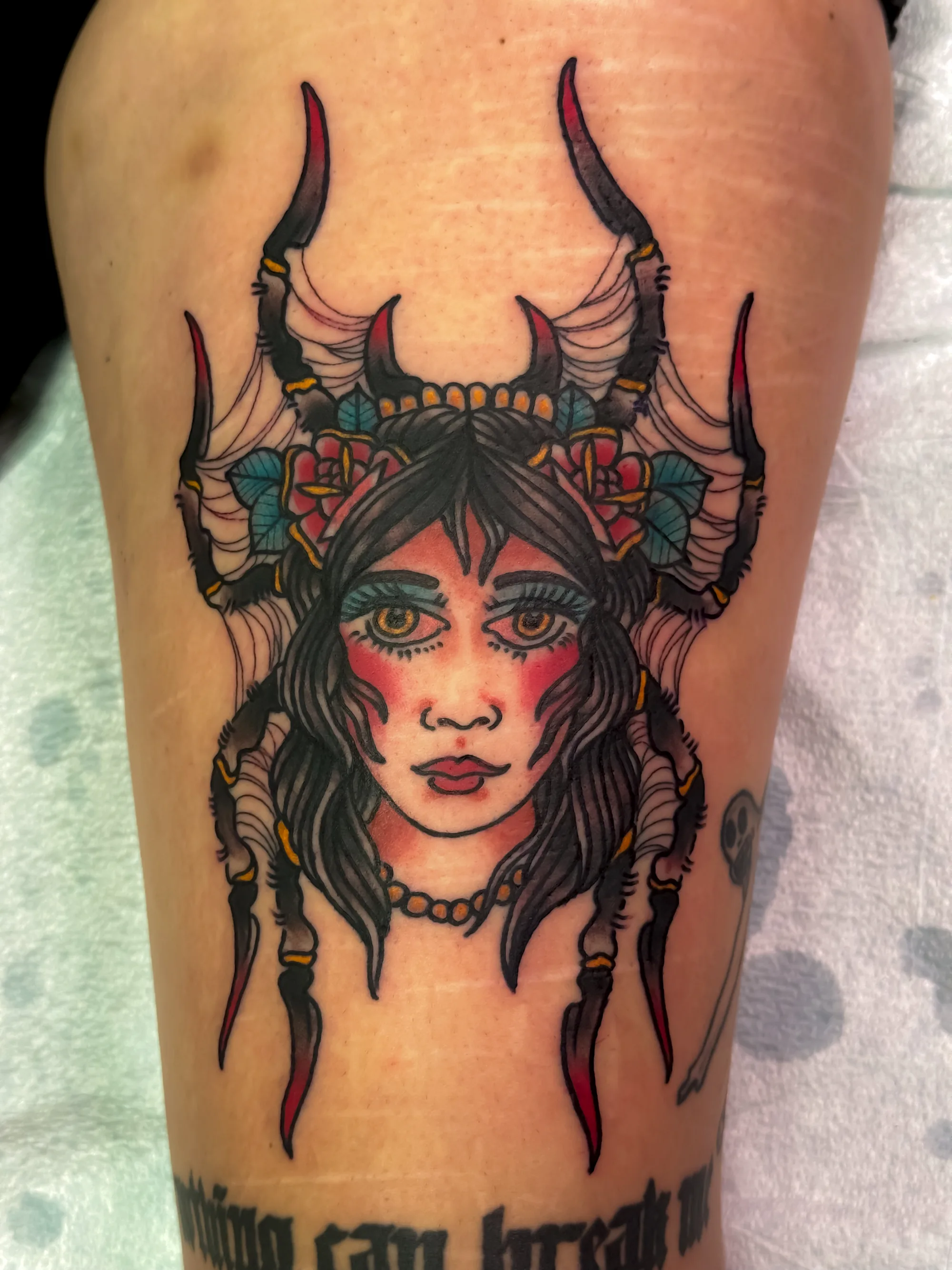
Lady Head & Spider Traditional
Upper thigh · Medium piece
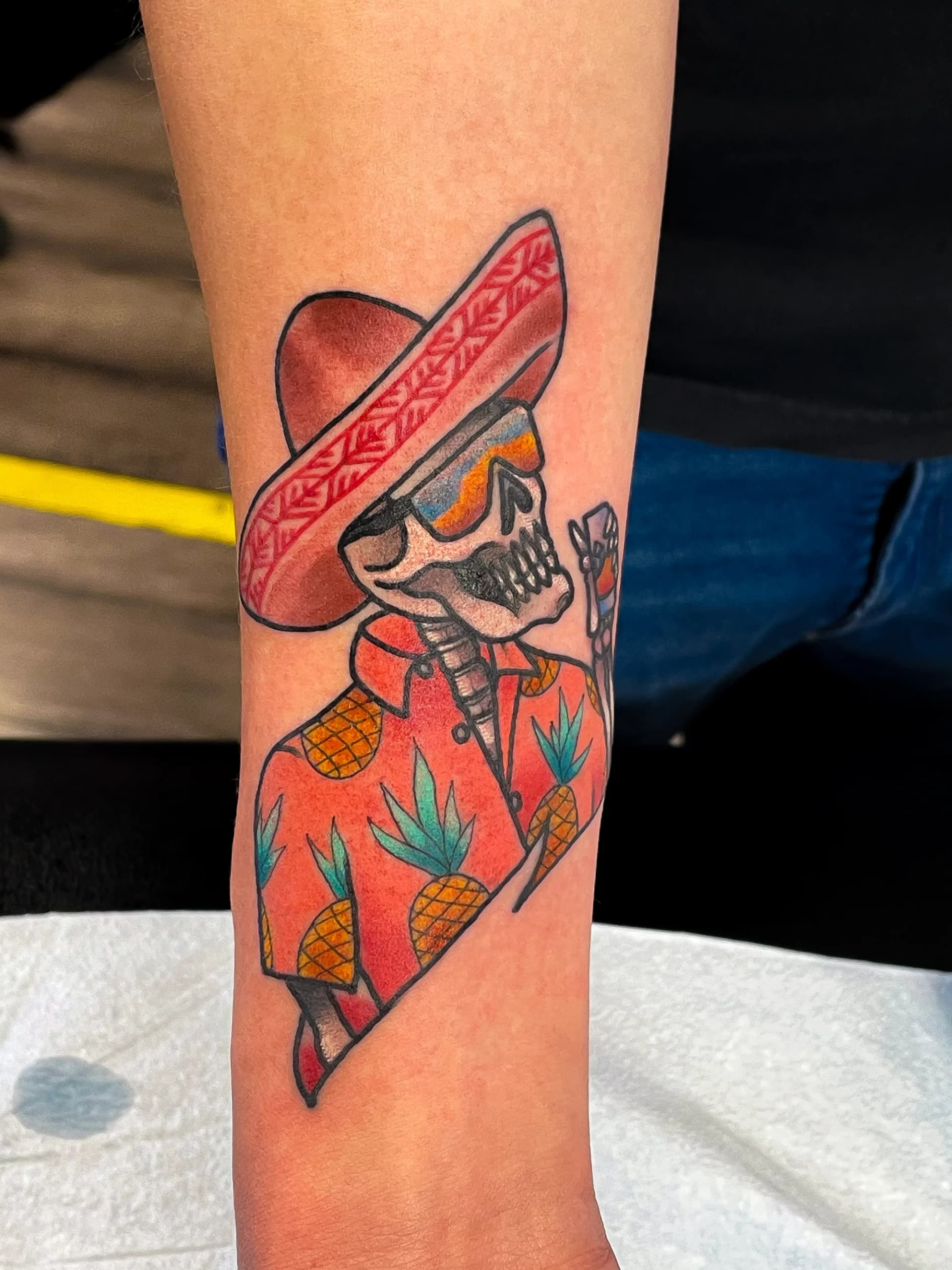
Skeleton Sombrero Traditional
Forearm · Medium piece
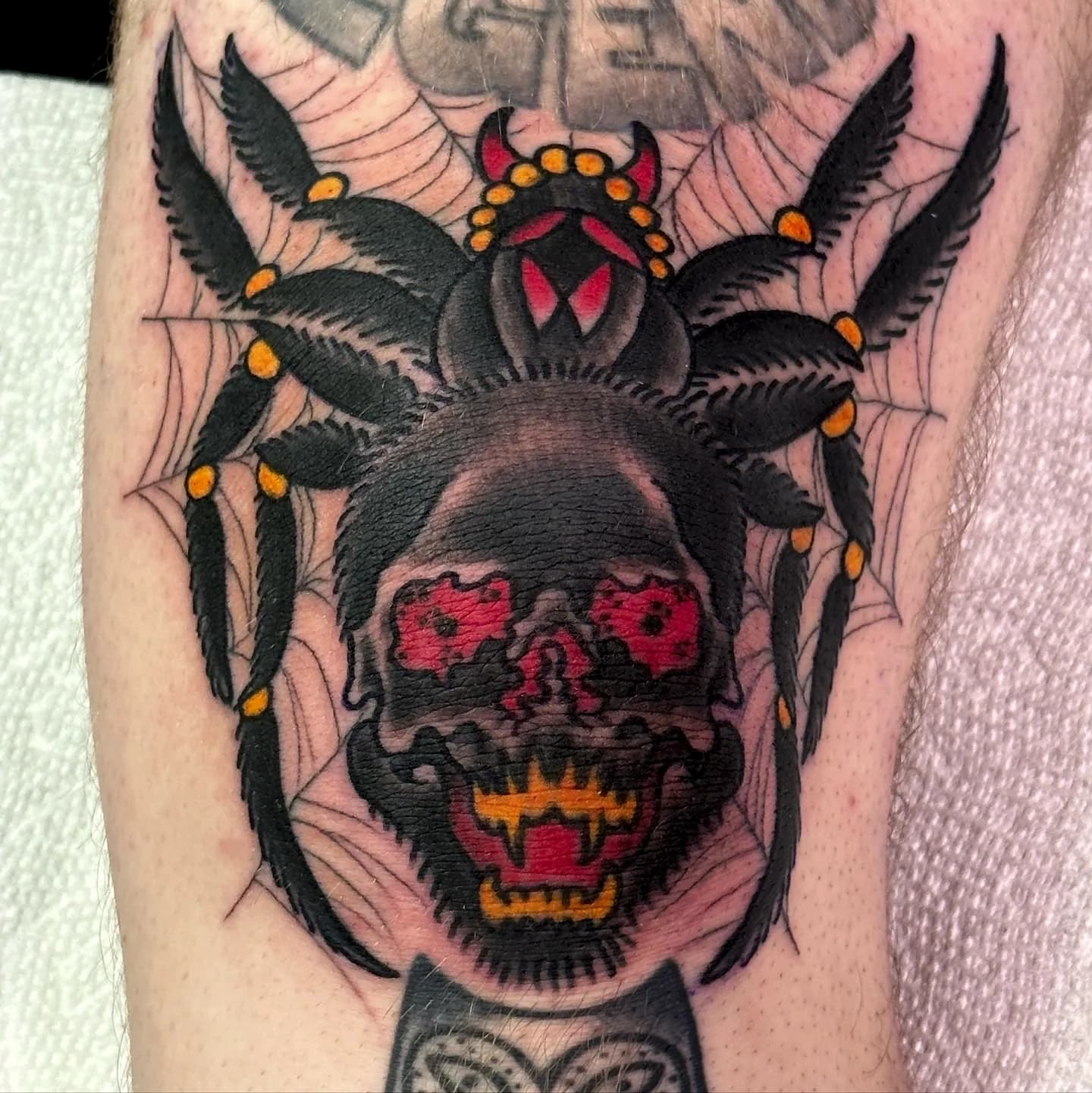
Skull & Spider Knee Traditional
Knee · Small piece
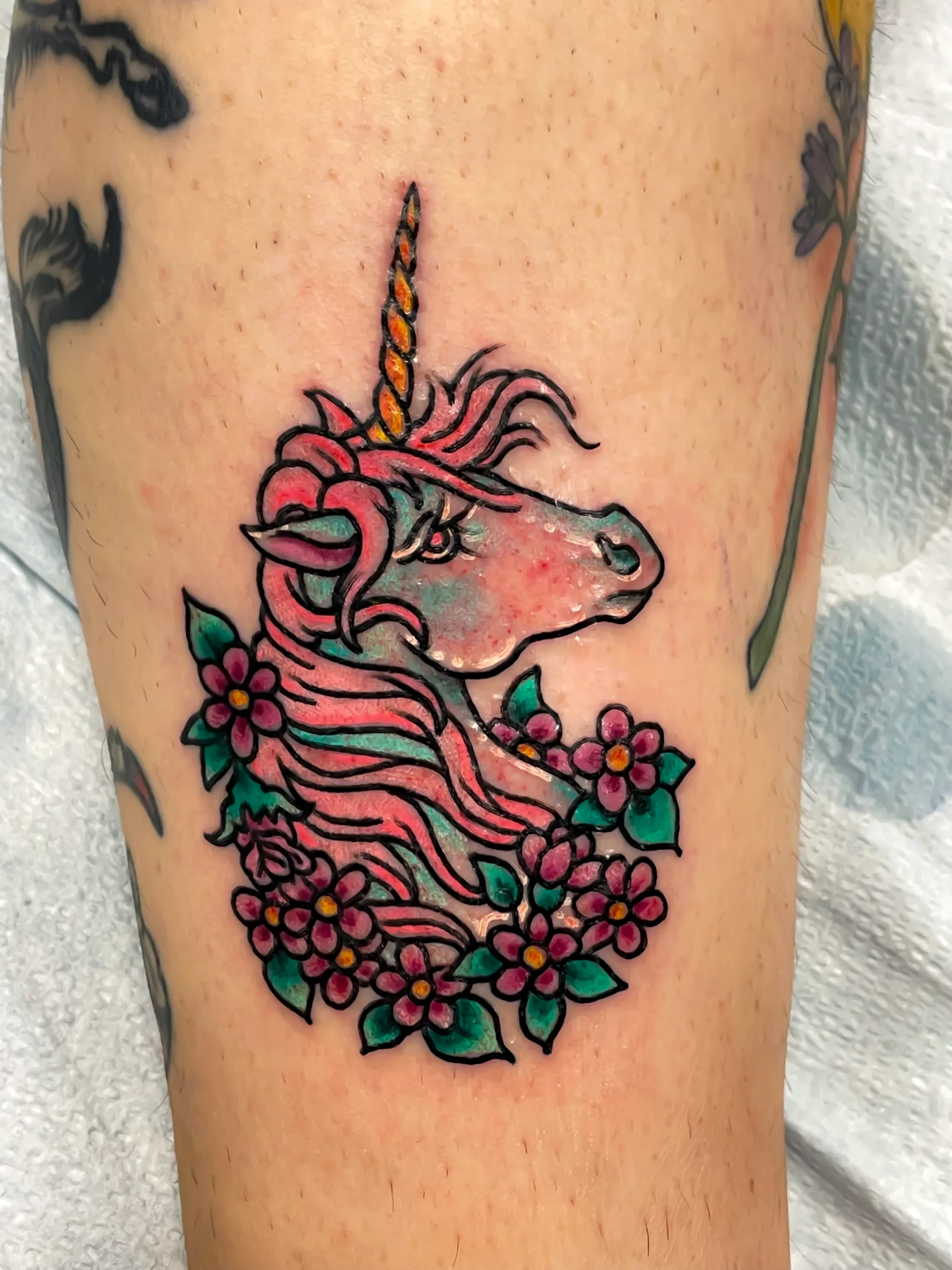
Unicorn Traditional Colour
Lower leg · Small-medium piece
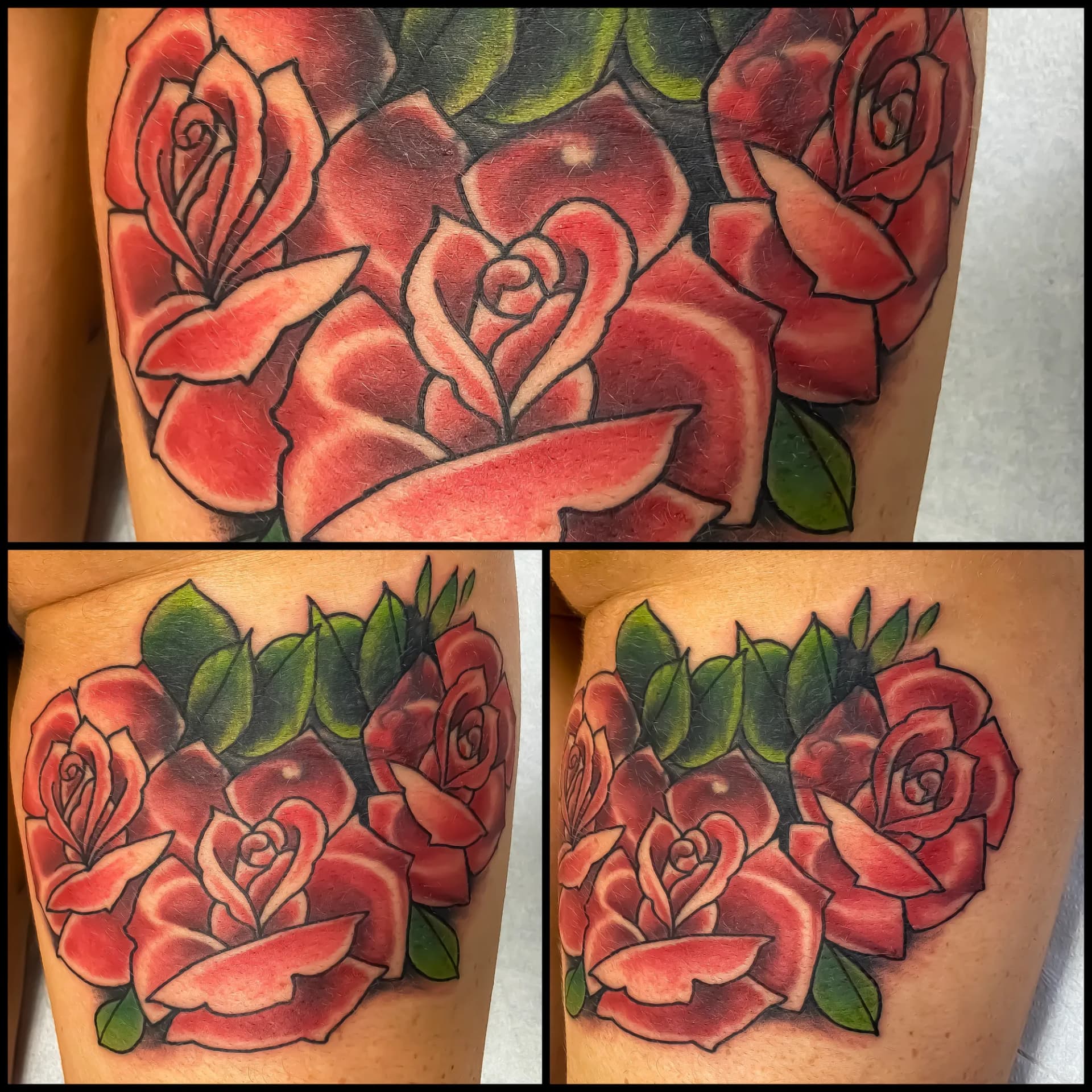
Three Roses Traditional Colour
Shoulder / upper arm · Medium piece
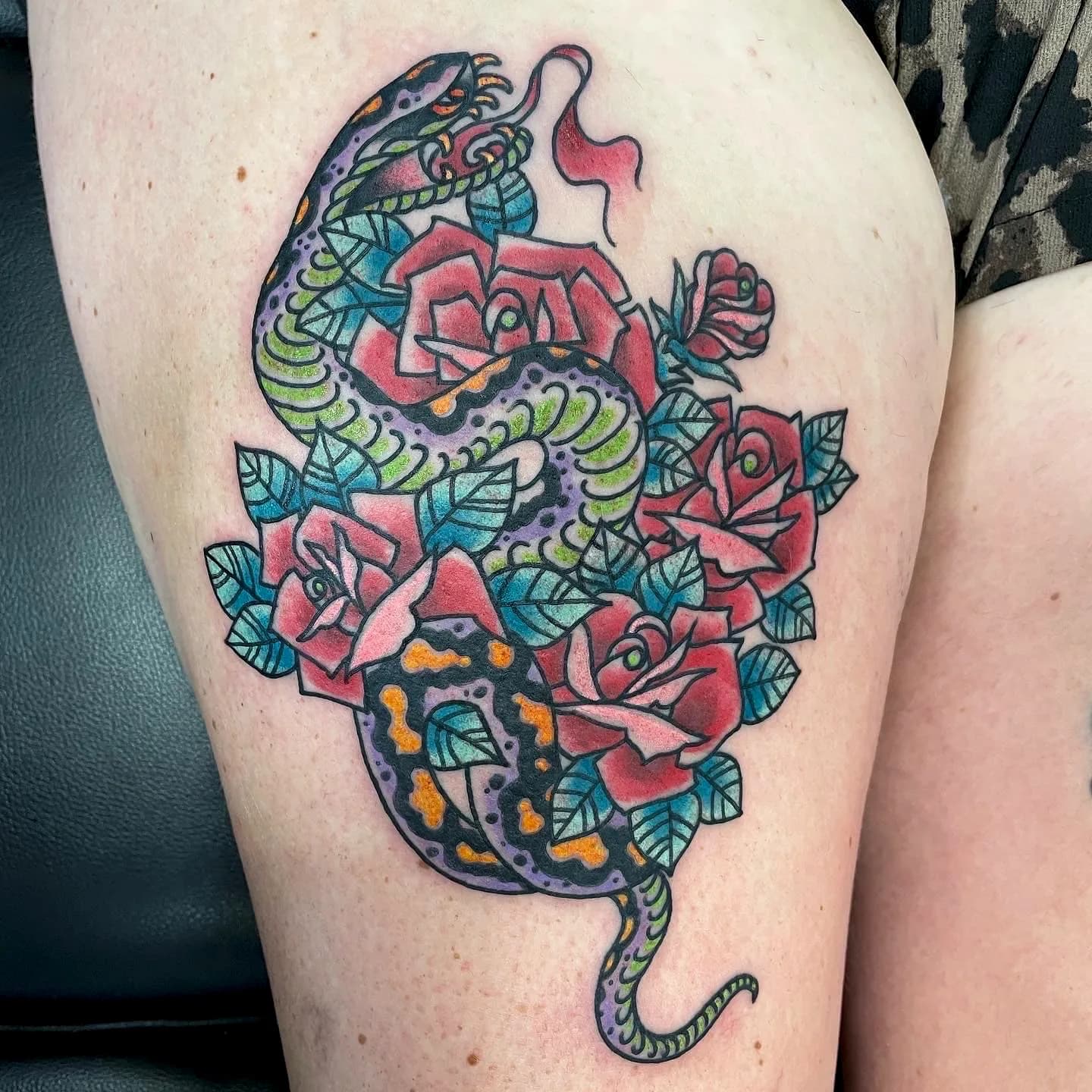
Snake & Roses Traditional Colour
Thigh · Large piece
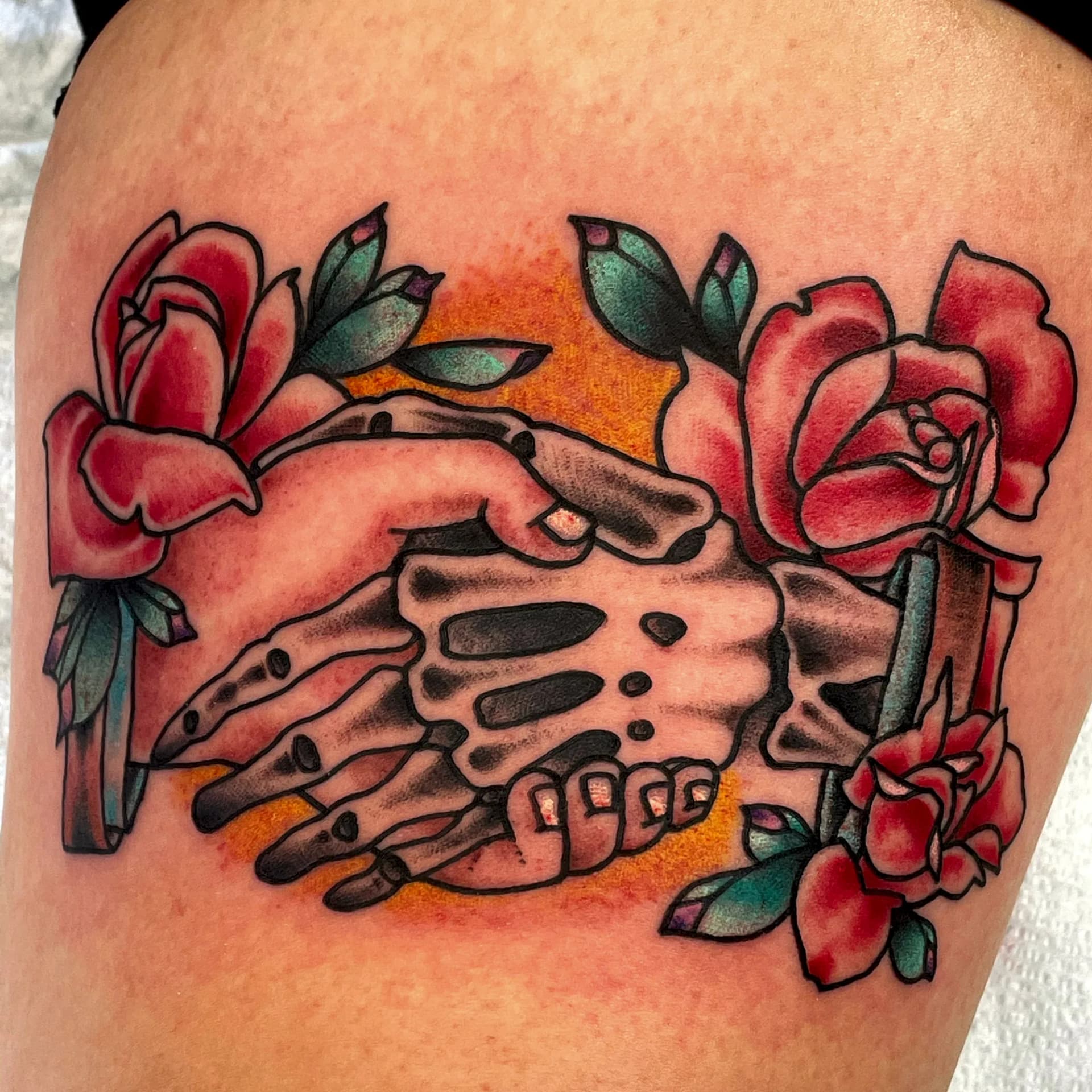
Skeleton Handshake Traditional
Forearm · Medium piece
Skull Mask Traditional Colour
Calf · Medium piece
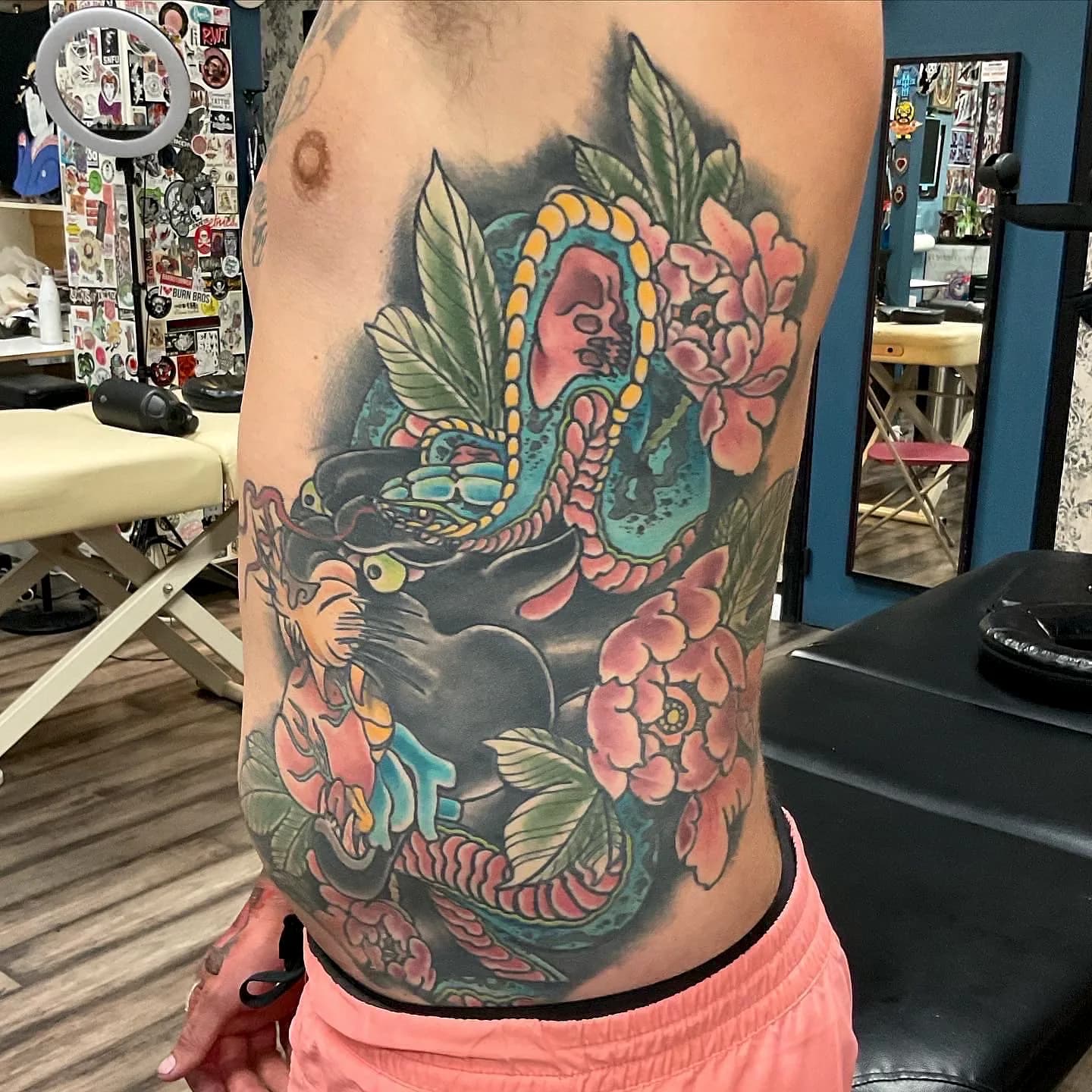
Panther & Snake Ribs Traditional
Ribs · Large piece
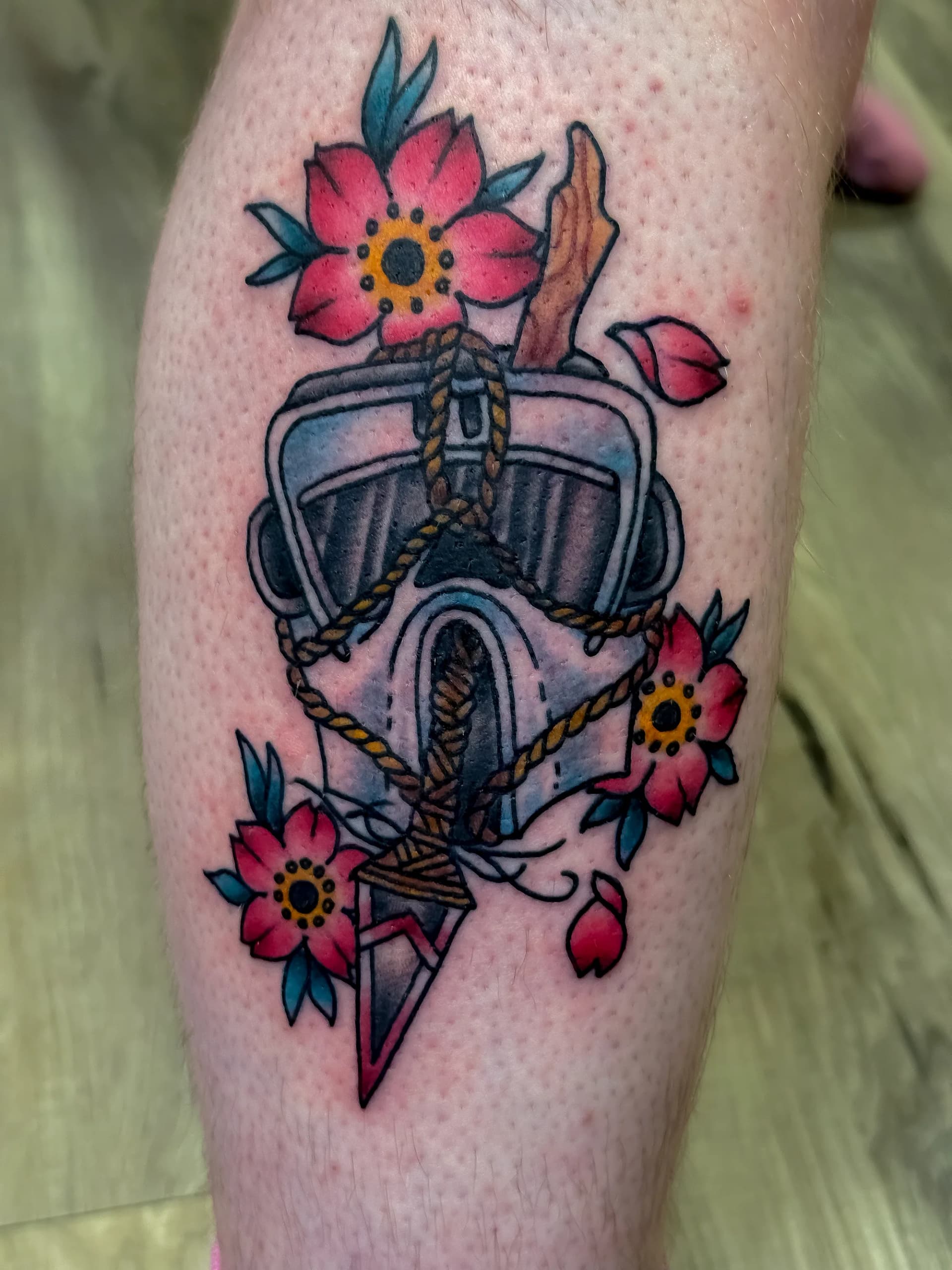
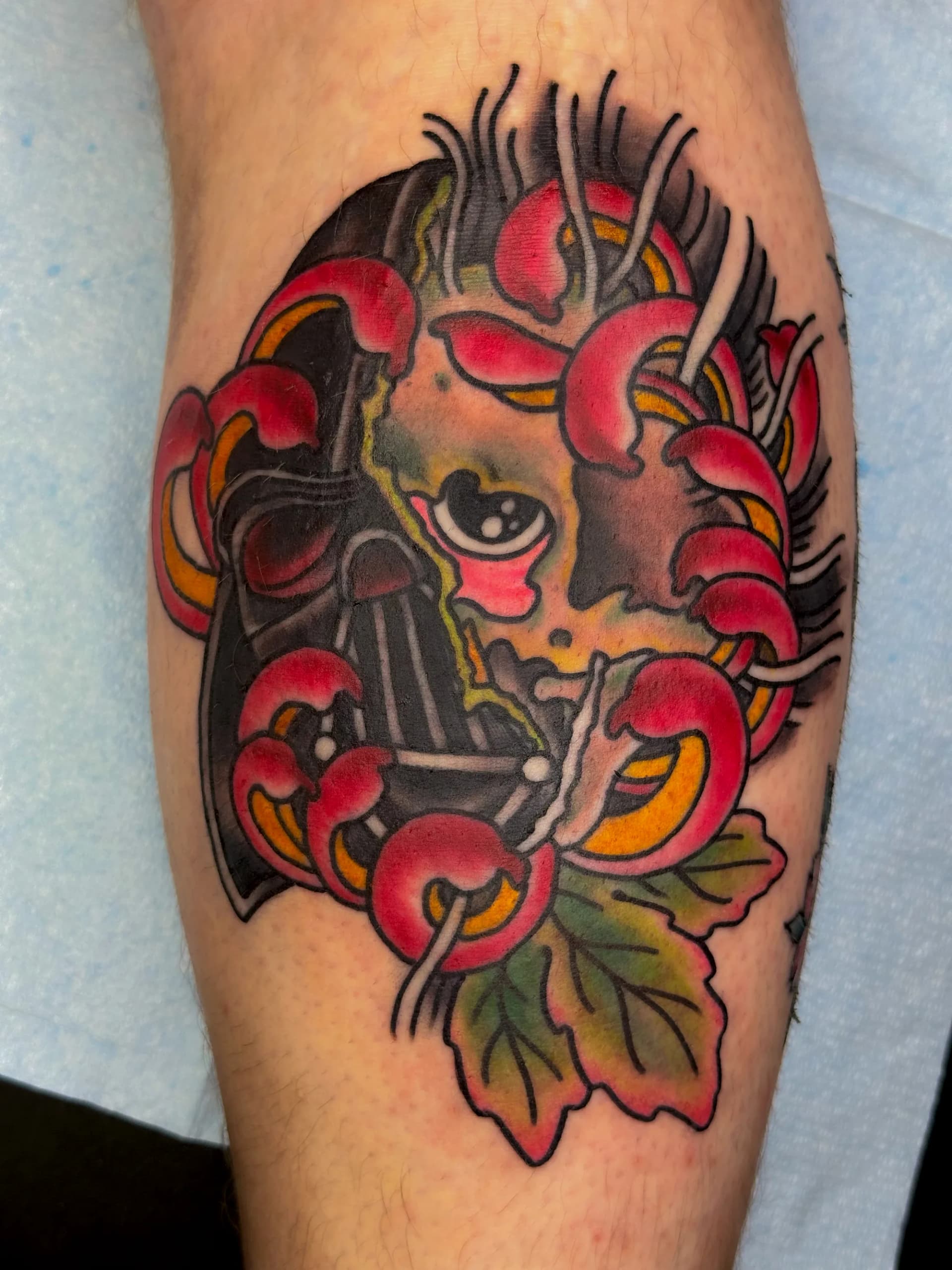
Star Wars Traditional with Cherry Blossoms
Calf · Medium piece
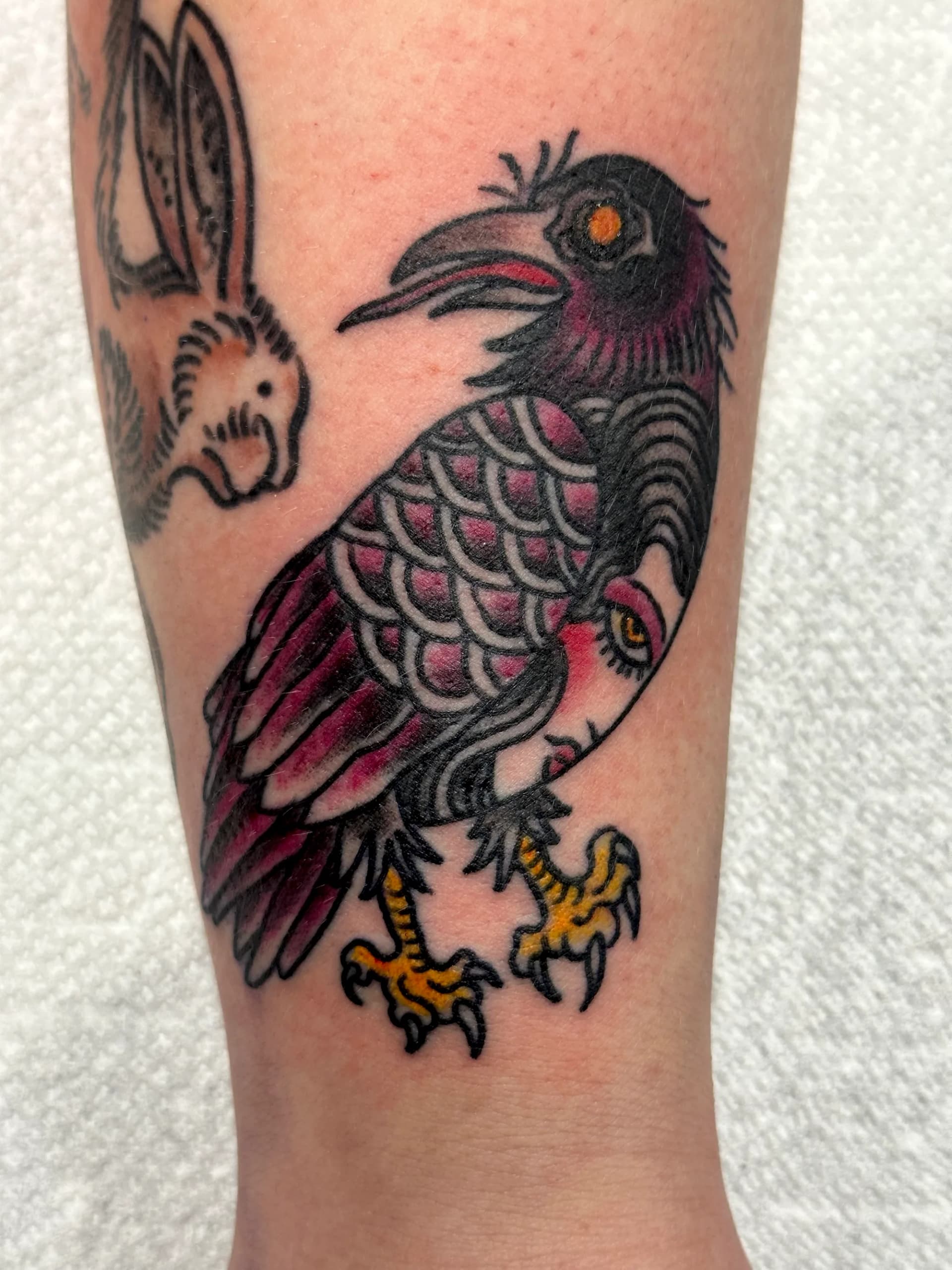
Bird & Lady Face Traditional
Upper arm · Medium piece
Pricing
Quoted before the drawing starts
Small traditional work is quoted up front rather than billed by the hour — roughly $150 for something small, $250 mid-size, and $350 for larger work. Once a piece gets big enough it moves onto the hourly rate of $200.
“It's really hard to price a tattoo that isn't drawn or sized yet — that changes the price dramatically.”
So the number comes after the design conversation, not before it. Tell me the subject, roughly the size, and where it's going, and there's something real to quote against. How the process runs.
The shop is at 898 Dundas St., London, Ontario, Thursday through Saturday, 11:00 AM to 5:00 PM. Appointments are the reliable way in; walk-ins are welcome when time permits. Call (519) 870-8878 or use the contact form.
Questions
Traditional tattooing, answered
What counts as traditional?
Bold linework, a limited colour palette, subjects that have been tattooed for a century because they hold up — eagles, roses, daggers, panthers, ships. Built to read from across a room, not up close.
Do you work from flash, or is everything custom?
Both. There's flash available, and custom traditional work drawn for you.
What does a small traditional piece cost?
Quoted before the design starts — roughly $150 small, $250 mid-size, $350 for larger work. Bigger pieces move to the hourly rate. It's really hard to price a tattoo that isn't drawn or sized yet.
What's the difference between traditional and neo-traditional?
Neo-traditional keeps the bold structure and outlines but opens up the colour palette and adds more detail and depth. Traditional stays tighter — fewer colours, simpler rendering, closer to what was being tattooed a hundred years ago.
Can traditional work be done in black and grey?
Yes. Deep contrast and bold structure rendered without colour — same design language, no colour.
Do you do cover-ups?
Yes, and traditional is often the right approach for it — bold linework and solid colour cover far better than fine detail does. What's possible depends on what's already there, so it starts with photos.
Why don't you do photorealism or portraits?
A stylized portrait isn't a photograph rendered in skin. It's a likeness drawn through the same design language as the rest of my work — bold linework, deliberate colour, composition built to read from across a room. Photorealism works the opposite way: soft gradients, fine detail, no outline holding it together.
That's why I don't take photorealism or straight portrait work — not because it isn't skilled, but because it isn't what I was taught to build. I was taught traditional tattooing, and everything I do runs through that — bold structure, work built to hold up. That's the tattoo I want to put my name on.
How do you develop a design?
A friend once told me: stop chasing a style. You will never have somebody else's style. What makes your art your style are the "mistakes" you make in your artwork — and that's what makes it yours.
I was taught traditional tattooing, and I come at Japanese stylized tattooing from that standpoint, and the same with traditional. I don't copy-paste or trace. I draw the artwork the way my brain and my eyes see it.
Book it in
Off the wall, ordrawn for you.
Send the subject, rough size, and placement. Cover-ups start with photos of what's already there.